
Cytranet’s Doug Roberts on Why Fiber Is Just the Beginning
There is a certain kind of quiet confidence that comes with having spent decades in the trenches of the internet infrastructure business. Doug Roberts, Chief Technology Officer at Cytranet, has that confidence in spades. Sitting down to talk about where the company is headed, Roberts wastes no time getting to the point. The conversation quickly moves past the usual buzzwords and into something more substantive — a vision for what business internet should actually look like in an era defined by artificial intelligence, edge computing, and an insatiable appetite for bandwidth.
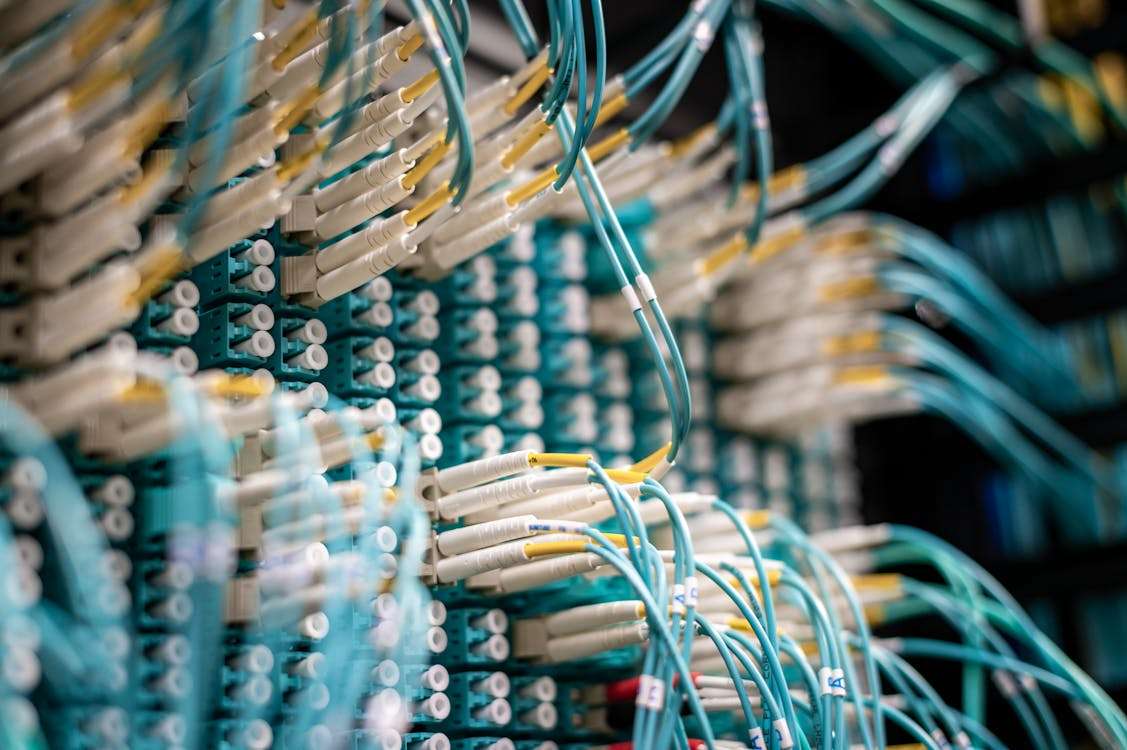
Cytranet has been expanding its fiber footprint in recent months, and Roberts is clearly energized by the momentum. “Fiber is the foundation,” he says, leaning forward slightly. “Everything else we want to do — everything our customers want to do — starts with having a connection that doesn’t let you down. When a business is running cloud-based applications, doing video conferencing, processing data in real time, they cannot afford latency or packet loss. Fiber eliminates those conversations entirely.”
The company has been pushing deeper into markets that have historically been underserved by major carriers, particularly mid-sized businesses and enterprises in areas where the big players have been slow to invest. Roberts sees that gap as both a responsibility and an opportunity. “There are businesses out there that have been told for years that enterprise-grade fiber is either unavailable or out of their budget. We are changing that. When a manufacturer or a logistics company or a healthcare provider gets symmetrical gigabit fiber for the first time, the reaction is almost always the same. They cannot believe what they had been putting up with before.”
Fiber as the Foundation for AI Workloads
The timing of Cytranet’s fiber expansion is not accidental. Roberts points to the rapid adoption of AI-driven tools across virtually every industry as a key driver behind the surge in demand for high-capacity, low-latency connectivity. “AI is not a future thing anymore. It is happening right now inside businesses of every size. Companies are running large language models, they are doing real-time data analysis, they are automating workflows that used to require entire teams. All of that requires a network that can keep up. If your internet connection is the bottleneck, none of those tools perform the way they are supposed to.”
The Convergence of Fiber and Edge Computing
Roberts is particularly enthusiastic about what he sees as the convergence of fiber infrastructure and edge computing. As more businesses look to process data closer to where it is generated rather than routing everything through distant cloud servers, the role of a reliable, high-speed local connection becomes even more critical. “The edge is where things get interesting,” he says. “We are working with customers who are building out local processing capabilities, whether that is for security cameras that use computer vision, or manufacturing floors with sensors generating constant streams of data, or retail environments that need to make decisions in milliseconds. The network has to be invisible. It has to just work.”
On the topic of data centers, Roberts describes a growing trend he is seeing among Cytranet’s business customers — a move toward hybrid models where some workloads live in major cloud platforms while others are handled in regional or even on-premises facilities. “The all-in cloud approach made a lot of sense for a while, and it still makes sense for certain things. But we are seeing businesses get smarter about where their data lives and how it moves. They want control. They want predictability in their costs. They want to know that if something goes wrong in one place, they are not completely offline. Fiber connectivity that ties all of those pieces together is what makes that kind of architecture actually work.”
When asked what he is most proud of in terms of Cytranet’s recent progress, Roberts pauses for a moment before answering. “Honestly, it is the customer stories. We had a distribution company that was running on a bonded DSL connection — just cobbling together whatever they could get — and they were losing productivity every single day because of it. We got them on fiber, and within a week their operations manager called us to say that their order processing time had dropped significantly and their team was actually less stressed. That is not a technical metric. That is a real business outcome. That is why we do this.”
Looking Ahead: Challenges and Accelerating Demand
Roberts is also candid about the challenges ahead. Building fiber infrastructure is expensive and time-consuming, and competing for talent in the technology sector remains difficult. But he does not dwell on the obstacles for long. “This industry moves fast, and the demand is only going in one direction. Businesses are not going to need less bandwidth next year. They are not going to use fewer AI tools or run fewer applications in the cloud. The need for what we do is accelerating, and we intend to accelerate right along with it.”
As the conversation wraps up, Roberts circles back to something he said near the beginning — that fiber is the foundation. It is clear he means it in more than just a technical sense. For Cytranet, reliable connectivity is the starting point for everything a modern business wants to become, and Roberts seems very much at home being the person responsible for building it.
Talk to Cytranet About Your Business Connectivity
Cytranet is a Las Vegas-based licensed telecommunications carrier providing dedicated fiber internet, fixed wireless, business VoIP and hosted PBX, managed Wi-Fi, colocation, and two-way radio solutions to businesses, nonprofits, and government organizations across Nevada, Arizona, California, and the broader Southwest. To discuss your needs with our team, call 702-846-5000 or email info@cytranet.com.