
Cytranet’s Quiet Expansion Is Changing What Businesses Expect From Their Internet Provider
There is a certain kind of confidence that comes from someone who has spent decades watching an industry evolve. Doug Roberts, Chief Technology Officer at Cytranet, carries that confidence naturally. Sitting down to talk about where the company is headed, he does not reach for buzzwords or rehearsed talking points. He talks about fiber like someone who has personally pulled cable through conduit, and he talks about AI like someone who has actually deployed it in a production environment.
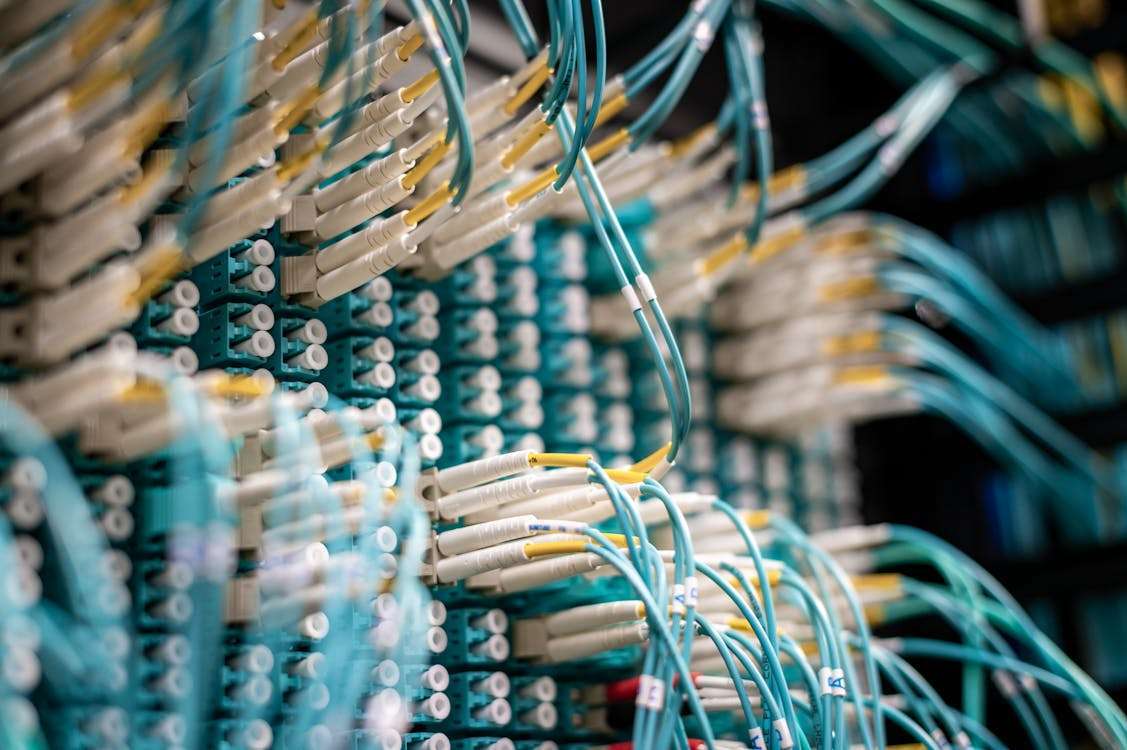
That combination of hands-on experience and forward-thinking vision is exactly what has been driving Cytranet’s recent momentum, particularly around its expansion of fiber connectivity for business customers and a growing push into high-density datacenter services.
Looking to the Future
“Businesses have been underserved for a long time,” Roberts said. “They’ve been handed the same consumer-grade product with a slightly higher price tag and told that’s business internet. That’s not what we do. When a company comes to us, we’re thinking about their uptime, their redundancy, their growth over the next five years. Fiber is the foundation of all of that.”
Cytranet has been quietly extending its fiber footprint, and Roberts is candid about why that matters more now than it ever has. The appetite for bandwidth among businesses is not slowing down. Remote work normalized high-throughput connections. Cloud adoption made latency a real operational problem rather than a theoretical one. And now artificial intelligence is adding an entirely new layer of demand that most networks were never designed to handle.
“AI is not just a software conversation anymore,” Roberts explained. “When you start talking about businesses running inference workloads, accessing large language models, processing real-time data, you are talking about serious, sustained bandwidth requirements. A company that was perfectly happy with a hundred-meg connection two years ago is calling us now because they’ve hit a wall. Fiber solves that wall.”
Investing in Datacenter Infrastructure
The datacenter side of the business has also seen significant activity. Roberts described an increasing number of enterprises looking to co-locate equipment or tap into managed infrastructure rather than building out their own server rooms. The economics have shifted, he said, and businesses that once prided themselves on owning their hardware are now recognizing that a well-run datacenter with redundant power, physical security, and direct fiber connectivity is a smarter investment than maintaining aging on-premise gear.
“We’ve had customers come to us after a power event or a cooling failure in their own facility and the conversation changes pretty quickly,” Roberts said with a laugh. “Nobody wants to learn that lesson twice. What we offer is reliability that’s genuinely hard to replicate on your own unless you’re willing to spend a lot of money. Most businesses aren’t in the business of running datacenters. They shouldn’t have to be.”
When asked about what sets Cytranet apart in a market crowded with large national carriers and a long tail of regional providers, Roberts points to something less tangible than infrastructure. He talks about the relationship.
Expanding the Fiber Network
“The big guys have great marketing. They’ll show you a beautiful map of their fiber network and quote you a price and then you’ll spend three weeks trying to get someone on the phone when something goes wrong. We’re not that. Our customers have a real person they can reach. That’s not an accident, that’s a decision we made about who we want to be.”
That philosophy extends into how Cytranet is approaching AI integration within its own operations. Roberts is exploring how machine learning tools can improve network monitoring, predict issues before they become outages, and help the team respond faster when anomalies appear. He is thoughtful about it, though, pushing back gently on the idea that AI is a magic solution.
“There’s a lot of hype right now and I understand why. Some of it is deserved. But we’re not going to bolt something onto our network just to say we did it. Every tool we bring in has to make the experience better for the customer. If it doesn’t do that, it doesn’t belong here.”
Navigating the Challenges
What comes through most clearly in talking with Roberts is that he genuinely enjoys the technical challenge of what he does. He lights up when the conversation turns to routing architecture or the physics of signal over long fiber runs. He is the kind of CTO who still wants to understand the details, even as the company grows and the strategic demands on his time increase.
For businesses evaluating their connectivity options, that level of technical depth at the leadership level is not something to take for granted. It means the decisions being made about infrastructure at Cytranet are being made by someone who understands what is actually at stake.
“Connectivity is not a commodity, even though a lot of people treat it that way,” Roberts said. “When your internet goes down, everything stops. Your phones, your cloud apps, your ability to process a transaction. We take that seriously because our customers have to take it seriously. That’s the job.”