
Cytranet’s Doug Roberts on Why Fiber Is the Foundation of Everything That Comes Next
There is a particular kind of optimism that comes from someone who has spent decades watching the internet grow from a novelty into the backbone of modern civilization. Doug Roberts, Chief Technology Officer at Cytranet, carries that optimism with him, and it comes through clearly the moment he starts talking about what is happening right now in the world of fiber connectivity and what it means for businesses of every size.
“We are at an inflection point,” Roberts said during a recent conversation about the company’s expanding fiber infrastructure. “The demand for bandwidth is not slowing down. If anything, it is accelerating faster than most people anticipated, and that is largely because of AI.”
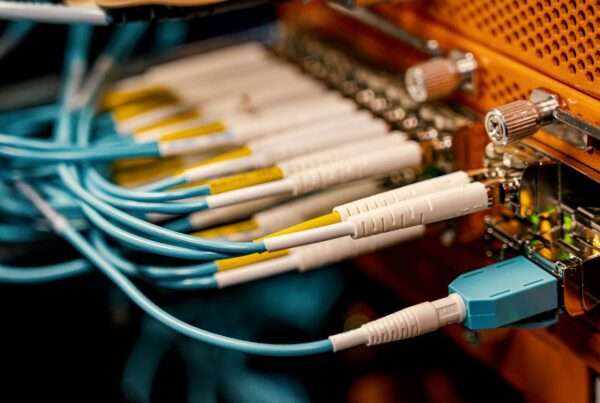
Cytranet has been quietly building out its fiber network for years, but Roberts says the pace of that expansion has picked up considerably as more businesses come to understand that their digital ambitions are only as strong as the pipe delivering their data. The company recently extended its fiber footprint into additional commercial corridors, bringing symmetrical gigabit and multi-gigabit connectivity to businesses that previously had to settle for slower, less reliable alternatives.
“When a business tells me they are adopting AI tools, my first question is always about their connectivity,” Roberts said with a laugh. “Because you can have the best AI platform in the world sitting on top of a mediocre internet connection and you are going to be frustrated every single day. The two go hand in hand.”
Roberts is particularly enthusiastic about what fiber infrastructure means for companies that are leaning into cloud-based operations and real-time data processing. He described a growing number of Cytranet’s business customers who are running workloads that would have been unthinkable even five years ago, things like real-time video analytics, large language model inference at the edge, and multi-site data replication that demands consistent low-latency connections across locations.
“Latency is the silent killer of productivity,” he said. “People talk about speed, and speed matters, but when you are dealing with AI-driven applications or accessing resources in a datacenter, latency is what determines whether the experience feels seamless or broken. Fiber gives you both. You get the speed and you get the consistency.”
On the topic of datacenters, Roberts sees a significant shift underway in how businesses think about where their data lives and how it moves. He noted that the rise of regional datacenter hubs is creating new opportunities for companies that want the performance benefits of proximity without the cost of building and maintaining their own infrastructure.
“Businesses are getting smarter about this,” he said. “They understand that having a direct fiber connection to a regional datacenter is a competitive advantage. It is not just about storage. It is about speed of access, security, and reliability. When your fiber connection goes directly into a carrier-grade facility, you are operating at a completely different level than someone running over a shared cable connection.”
Roberts also touched on the evolving expectations of business internet customers, who he says are far more sophisticated than they were even a few years ago. Gone are the days when a business owner would simply ask for the fastest speed available. Today, the conversations are richer and more nuanced.
“Our customers are asking about SLAs, about redundancy, about how we handle failover, about what our network looks like during peak hours,” he said. “That tells me the market has matured. People have been burned by outages or by providers who oversold their networks, and now they want to know exactly what they are getting. That is a conversation we welcome because our network is built to handle it.”
When asked what excites him most about the next few years, Roberts did not hesitate. He pointed to the convergence of AI, fiber, and edge computing as something that is going to fundamentally change what is possible for small and mid-sized businesses.
“For a long time, enterprise-grade technology was out of reach for smaller companies because the infrastructure costs were prohibitive,” he said. “What we are seeing now is that fiber connectivity, combined with cloud and AI tools, is democratizing access to that level of capability. A ten-person company can now operate with the kind of technological sophistication that used to require a massive IT department. That is genuinely exciting to me.”
Roberts also acknowledged that with all of this growth comes responsibility, particularly around reliability and security. He said Cytranet has invested heavily in network redundancy and monitoring systems to ensure that as customers rely more deeply on their connectivity, the network is there when they need it.
“We take that trust seriously,” he said. “When a business runs their phone system, their point of sale, their cloud applications, and now their AI tools all over your network, you are woven into the fabric of how they operate. That is not something we take lightly. It pushes us to build better and to keep improving.”
The conversation wound down with Roberts reflecting on what the broader buildout of fiber infrastructure means for communities and economies, not just individual businesses. He sees connectivity as foundational in the same way roads and utilities are foundational, something that enables everything else to happen.
“Fiber is infrastructure,” he said simply. “And when you invest in infrastructure, you are investing in the future. That is what we are doing, and it is work that matters.”