
Cytranet’s CTO Doug Roberts on Why Fiber Investment Is the Backbone of AI-Ready Networks
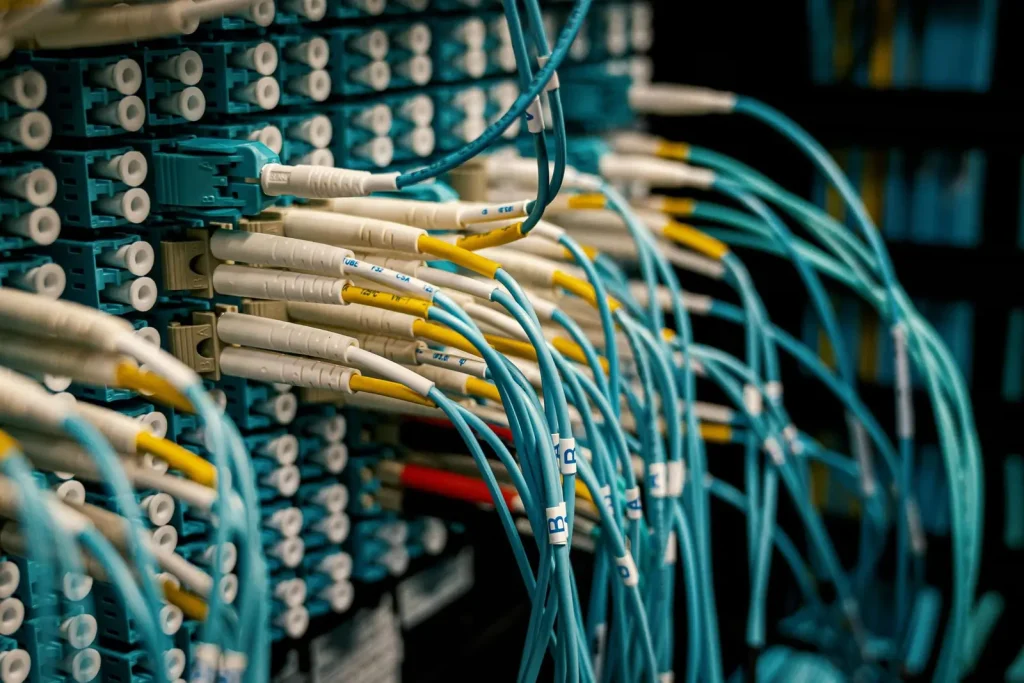
When Doug Roberts talks about the future of networking, he doesn’t start with the buzzwords. He starts with the pipes.
As Chief Technology Officer of Cytranet, a company that has quietly built a reputation providing telecom and internet services to Businesses, government agencies, and Enterprise Clients, Roberts has spent years thinking about what organizations actually need versus what vendors try to sell them. And right now, he says, the conversation around artificial intelligence is creating both confusion and genuine opportunity in the networking world.
“Everyone wants to talk about AI, and I get it,” Roberts said in a recent interview. “But what nobody wants to talk about is that none of it works without serious investment in the underlying network infrastructure. You can have the fanciest AI tools on the planet, but if your network can’t handle the data throughput, you’re dead in the water.”
It’s a timely observation. Across the telecom industry, carriers and service providers are racing to expand fiber networks and boost capacity as Enterprise Customers begin deploying AI-driven applications that demand massive amounts of bandwidth and ultra-low latency. Data center construction is booming, cloud traffic is surging, and the pressure on networks has never been higher.
Roberts said Cytranet recognized this trend early and has been investing heavily in its fiber infrastructure and network architecture to make sure its customers aren’t caught flat-footed.
“We’ve been expanding our fiber footprint and upgrading our core network specifically because we saw this wave coming,” he said. “Our government and enterprise clients are already starting to roll out AI-enhanced tools for everything from cybersecurity monitoring to Predictive maintenance to citizen services. They need a network partner who can actually deliver the performance those applications require, not just promise it on a spec sheet.”
What makes Roberts particularly optimistic is the convergence he’s seeing between fiber buildout, edge computing, and the growing demand for secure, high-capacity connections. He believes companies like Cytranet, which operate closer to the customer than the massive national carriers, are in a unique position to deliver tailored solutions.
“There’s a real advantage to being the provider that actually knows your network, knows your organization, and can engineer a solution that fits,” Roberts explained. “The big guys are great at scale, but when a government agency needs a custom fiber build with specific security requirements and guaranteed uptime, that’s where we thrive. We’re not handing you off to a call center. You’re talking to the people who designed and built the network.”
Roberts also pointed to the growing importance of Network Security as AI adoption accelerates. With more data moving across networks than ever before, and with increasingly sophisticated cyber threats targeting both private companies and public sector organizations, he said the role of the network provider has fundamentally changed.
“It used to be that we delivered bandwidth and Connectivity, and security was somebody else’s problem,” he said. “That’s not the world we live in anymore. Our customers expect us to be part of their security posture. We’re building security into the network layer itself, not bolting it on as an afterthought. When you’re carrying sensitive government data or critical business operations, there’s no room for a casual approach.”
One area where Roberts sees particular promise is in helping mid-sized cities and regional government entities modernize their connectivity. While major metropolitan areas have had access to high-speed fiber for years, many smaller municipalities and regional agencies are still working with aging infrastructure that simply can’t support modern applications.
“There’s a real digital divide at the government and enterprise level that people don’t talk about enough,” he said. “A county government that’s still running on legacy copper or outdated circuits can’t deploy the same tools that a big city can. We’re working to close that gap. When we bring fiber to a new government campus or connect a business park that’s been underserved, it’s genuinely Transformative for those organizations. They go from being stuck in the past to being able to compete and serve their communities at a totally different level.”
Roberts was careful to note that while he’s excited about the technology trends reshaping the industry, he doesn’t think chasing every new trend is the right approach for a company like Cytranet.
“We’re not trying to be everything to everyone,” he said. “We’re trying to be the best network partner for organizations that need reliable, secure, high-performance connectivity. That’s been our focus, and honestly, the market is coming to us right now. The demand for what we do has never been stronger, and I think that’s only going to accelerate as AI adoption picks up and organizations realize their old network just isn’t going to cut it.”
For Roberts, the bottom line is simple. The most exciting technology in the world still depends on the fundamentals.
“Build the network right, secure it properly, and be there for your customers when they need you,” he said. “It’s not glamorous, but it’s what actually matters. And it’s what we do every single day at Cytranet.”
Talk to Cytranet About Your Business Connectivity
Cytranet is a Las Vegas-based licensed telecommunications carrier providing dedicated fiber internet, fixed wireless, business VoIP and hosted PBX, managed Wi-Fi, colocation, and two-way radio solutions to businesses, nonprofits, and government organizations across Nevada, Arizona, California, and the broader Southwest. To discuss your needs with our team, call 702-846-5000 or email info@cytranet.com.
Talk to Cytranet
A business-only carrier for fiber internet, cloud voice, managed Wi-Fi, and managed IT. Start with a free technology evaluation.