For most of the past year, the conversation around artificial intelligence has focused on what happens inside the data center. Doug Roberts, Chief Technology Officer at Cytranet, thinks the more interesting story is what happens on the way there and back. As businesses and government agencies begin handing routine decisions to AI systems that act on their own, the network underneath those systems is quietly becoming the thing that decides whether they feel instant or sluggish.
“A year ago, most of our customers were using AI to answer a question and wait a few seconds for a response,” Roberts said in a recent conversation at the company’s Las Vegas office. “Now they’re building systems that take an action, check the result, and take the next action without a person in the loop. When software is making dozens of small round trips to get one job done, every millisecond of delay stacks up. That’s a network problem long before it’s a software problem, and a lot of people are only just realizing it.”
Industry researchers have started warning about the same thing. As AI tools shift from simply generating answers to carrying out multi-step tasks on their own, the number of back-and-forth connections behind a single request climbs sharply. A connection that felt perfectly fast for email or web browsing can feel frustratingly slow when an automated system has to make that trip again and again to finish its work. Roberts sees that shift as an opportunity rather than a headache, and it is one of the reasons he sounds genuinely energized when he talks about the road ahead.
Why latency became the new bottleneck
Cytranet provides voice, internet connectivity, managed services, network security, and cloud services to businesses, government entities, and enterprise clients across the Southwest and beyond. That mix gives Roberts a wide view of how organizations actually use their connections day to day, and he has watched the demands on those connections change in a hurry.
“The old way of measuring a network was raw speed. How many megabits, how big is the pipe,” he said. “Speed still matters, but consistency matters more now. An AI agent that’s coordinating a supply order or pulling records for a public safety dispatcher doesn’t care that you can move a huge file once a day. It cares that every small request gets answered the same way, every time, with no jitter and no surprises. Reliability has quietly become the headline feature.”
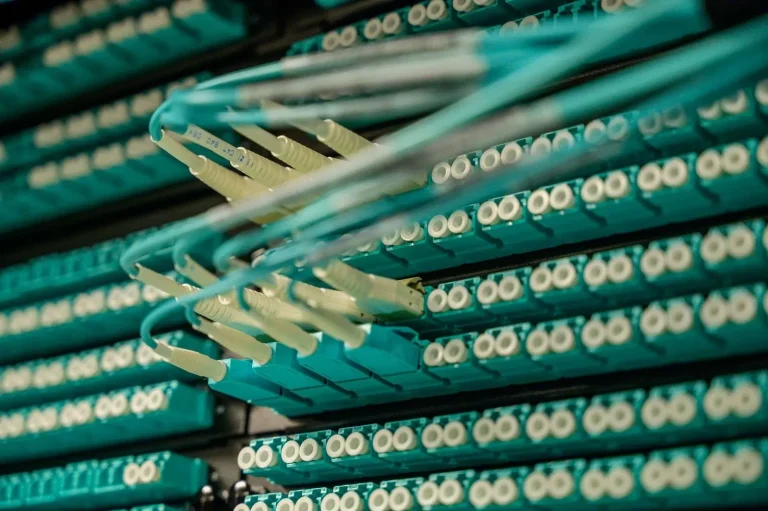
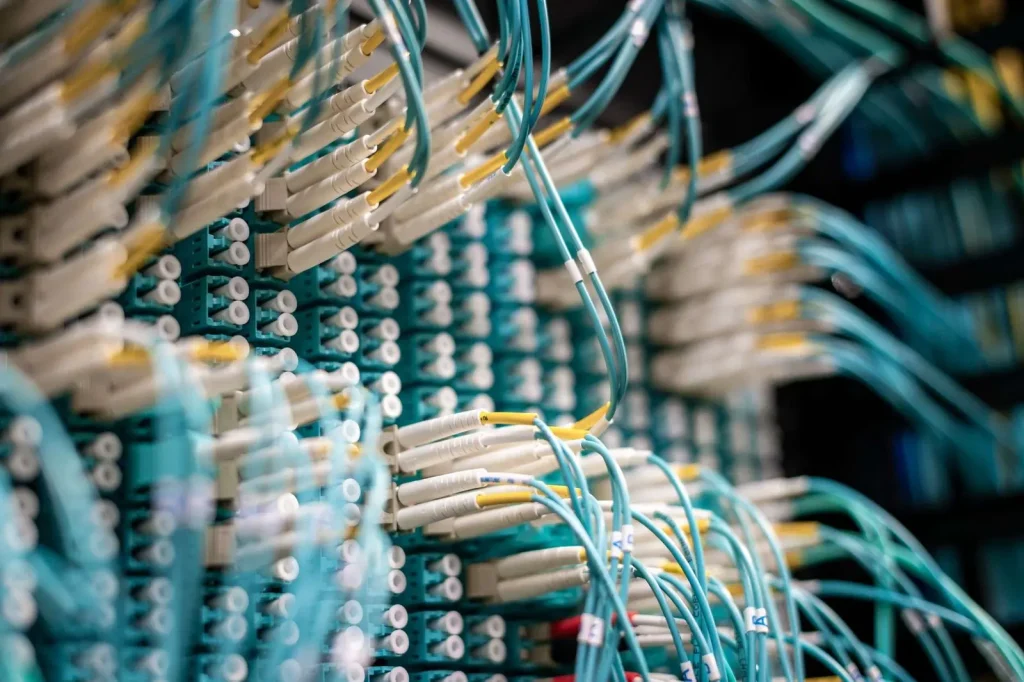
To meet that, Roberts said Cytranet has been steadily expanding its fiber footprint and tuning its core network so that traffic takes the shortest, most predictable path possible. The company has also been investing in capacity closer to where customers actually work, so that data does not have to travel hundreds of miles to a distant hub and back before an automated process can move on to its next step.
“The instinct people have is to throw the workload as far away as possible into some giant cloud and assume distance is free,” he said. “Distance is never free. The closer we can keep the heavy lifting to the customer, the snappier everything feels. For a regional provider like us, that’s actually our home turf. We can put resources near our customers in a way that a one-size-fits-all national approach struggles to match.”
Keeping it efficient, not just fast
One theme Roberts kept returning to was energy. The same AI boom that is straining networks is also straining the power that runs them, and he is adamant that speed cannot come at any cost.
“It would be easy to just keep adding equipment and burning more power to brute-force the problem,” he said. “We’ve tried hard not to do that. When we upgrade a piece of the network, we’re looking at how much work it does per watt, not just how fast it goes. Our customers care about their costs and their footprint, and so do we. A network that’s both quick and efficient is the goal, and the two aren’t in conflict if you design for it from the start.”
That discipline, he said, is part of what lets a smaller, focused company move quickly. Decisions that might take a large legacy carrier a year to work through can happen in weeks when the team is close to both the technology and the customers it serves.
A practical win for government and business
Roberts is especially enthusiastic about what the shift means for public sector clients, a group Cytranet has served for years. Agencies are adopting automated tools for everything from records management to infrastructure monitoring, and those tools only work as well as the connection underneath them.
“Government teams are under real pressure to do more with the same budgets, and these automated systems can genuinely help,” he said. “But they have strict requirements around security and reliability, and rightly so. Our job is to give them a connection that’s fast, predictable, secure, and that we can actually stand behind with a real person on the phone when they need us. That combination is what earns trust, and trust is the whole game in that world.”
Security runs through everything he describes. As more decisions get automated, Roberts said, the network itself has to be watched more carefully, because an automated system following bad instructions can cause problems faster than a human ever could. Cytranet has been strengthening the monitoring and protection built into its network so that customers can lean into automation without taking on hidden risk.
“The whole point of handing work to a machine is that it moves faster than you would,” he said. “That’s great until something goes wrong, and then speed cuts the other way. So we watch the network constantly and build in guardrails. We want our customers to feel like they can be ambitious with this technology because the foundation is solid.”
Looking ahead, Roberts does not expect the demand to cool off. If anything, he thinks the move toward systems that act on their own is still in its early days, and that the organizations laying down strong, efficient connectivity now will be the ones best positioned as the technology matures.
“We’re building for where our customers are going, not just where they are,” he said with a smile. “Every year the network has to be a little smarter, a little quicker, and a little more dependable than the year before. I find that genuinely fun. Helping a local business or a county agency do something today that wasn’t possible a couple of years ago, that’s the part of this job I love. There’s a lot of road in front of us, and we’re excited to drive it.”
Talk to Cytranet About Your Business Connectivity
Cytranet is a Las Vegas-based licensed telecommunications carrier providing dedicated fiber internet, fixed wireless, business VoIP and hosted PBX, managed Wi-Fi, colocation, and two-way radio solutions to businesses, nonprofits, and government organizations across Nevada, Arizona, California, and the broader Southwest. To discuss your needs with our team, call 702-846-5000 or email info@cytranet.com.
Talk to Cytranet
A business-only carrier for fiber internet, cloud voice, managed Wi-Fi, and managed IT. Start with a free technology evaluation.