The story of artificial intelligence is usually told through the things you can see: the chips, the sprawling data centers, the chatbots that now sit inside almost every business application. Yet the part that rarely makes the headlines is the one that decides whether any of it actually works. Underneath every AI feature a company depends on is a network that has to carry more data, more often, and with far less tolerance for delay than it did even a year ago. As that pressure builds, a growing number of technology leaders are arguing that the AI era is, at its heart, a story about business connectivity.
Few make that case as plainly as Doug Roberts, Chief Technology Officer of Cytranet, a Las Vegas based provider of internet, voice, and managed technology services for businesses, non-profit organizations, and government agencies across the country. Roberts has spent the better part of the last decade building and maintaining the connections that keep more than a thousand organizations online, and he has watched the demands on those connections change in ways that would have sounded far-fetched not long ago.
“For years the conversation with a customer was about speed, and speed alone,” Roberts said. “How many megabits, how big is the pipe. That was the whole discussion. Today the questions are different. People want to know whether the connection will hold up when their entire team is running AI tools at once, whether it will stay fast when the office is full, and whether it will simply keep working. Reliability has quietly become the feature that matters most, and AI is the reason why.”
A surge in demand that arrived faster than expected
The numbers behind that shift are hard to ignore. Industry analysts have noted that the appetite for network capacity is climbing sharply as businesses fold AI into everyday work, and that the places with the strongest fiber connectivity are also the places where AI adoption is growing the fastest. The two trends feed each other. Better connections make new tools practical, and those tools, in turn, consume far more bandwidth than the software they replaced.
Roberts sees the effect in the day-to-day patterns of his own customers. “A single AI-assisted task might touch a service in a distant data center, pull down a large model response, and do it dozens of times an hour for every person in the building,” he said. “Multiply that across a whole organization and you are looking at a completely different load than what these networks were designed to carry. The demand did not creep up on us. It arrived, and it arrived quickly, and it is rewriting the rules of business bandwidth as it goes.”
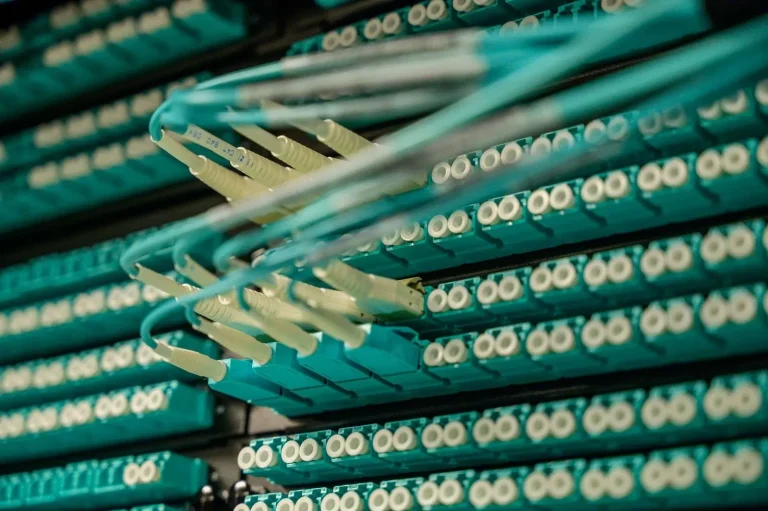
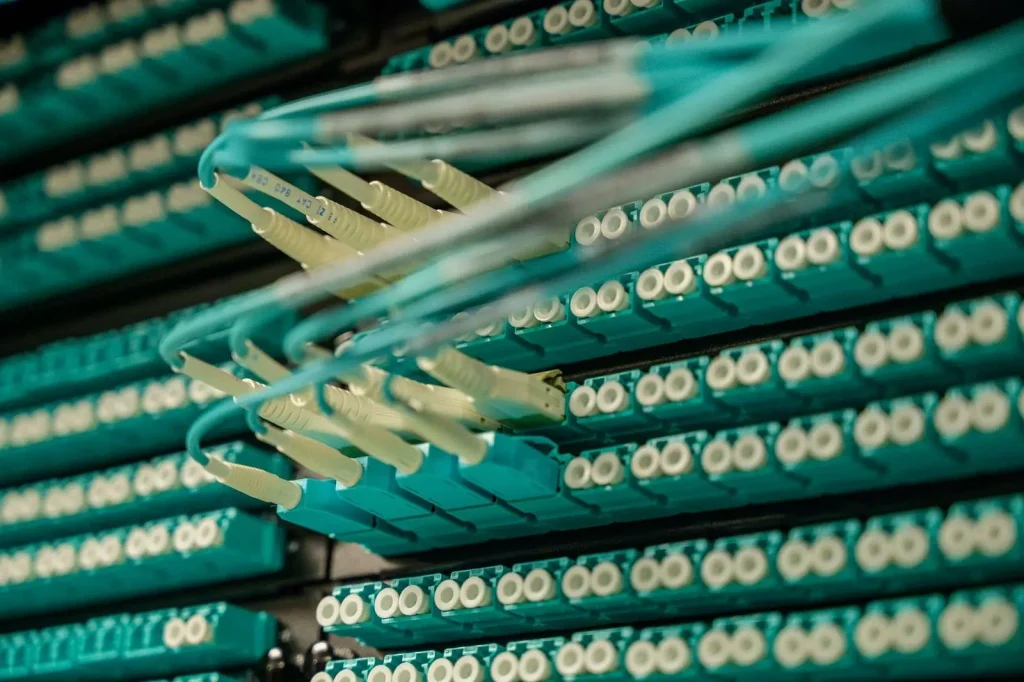
His answer has been to treat investment in fiber and in the equipment behind it not as an upgrade, but as a foundation. Cytranet has leaned into fiber-based business internet precisely because it offers the headroom that AI-heavy workloads require, along with the consistency that keeps performance steady when everyone is online at the same time.
When speed is no longer the whole point
One of the more striking changes Roberts describes is a move away from raw speed as the single measure of a good connection. Increasingly, what matters is latency, the small delay between a request and a response, and the ability to keep that delay low and predictable even under strain.
“There is a reason the whole industry is talking about low-latency networks right now,” he said. “Mobile networks have matured to the point where they can deliver genuinely responsive, dedicated performance, and that has changed what businesses expect from every connection, wired or wireless. When you are relying on a real-time tool, a half-second of hesitation is the difference between something that feels effortless and something people quietly stop using. Our job is to make the technology disappear into the background.”
That philosophy runs through the range of services Cytranet builds around its core connectivity, from hosted voice and unified communications to managed WiFi, cloud hosting, and structured cabling. The common thread, Roberts said, is designing each piece so it behaves predictably when the load is heaviest, rather than only when the office is quiet.
Security that has to think as fast as the threats
The same intelligence that is transforming how businesses work is also transforming the risks they face. Roberts is candid that the rise of AI has raised the stakes on network security, because the tools available to attackers have grown more capable at the same pace as everything else.
“The threats move faster and they are more convincing than they used to be,” he said. “You cannot defend a modern network with a checklist that gets reviewed once a quarter. You need systems that watch traffic continuously, that recognize when something looks wrong, and that respond before a person could even open the alert. That kind of continuous, intelligent monitoring has gone from a luxury to a baseline expectation, especially for the government agencies and larger organizations we serve.”
For those customers, Roberts said, security cannot be an afterthought bolted onto a finished network. It has to be woven into the design, combined with disciplined data backup and recovery so that an organization can keep operating even on a bad day. The goal is resilience, not just protection.
Bringing enterprise-grade tools within reach
Perhaps the theme Roberts returns to most often is access. The capabilities that once belonged only to the largest enterprises — dedicated fiber, intelligent security, cloud infrastructure, around-the-clock support — are now within reach of far smaller organizations, and he considers that one of the most encouraging developments of the moment.
“There was a real risk that AI would widen the gap between the biggest players and everyone else,” Roberts said. “What we are seeing instead is that a small business, a rural clinic, a local government office can now run on the same caliber of network as a national company. That is a genuine turning point. Reliable, capable connectivity is finally becoming something you can expect rather than something you have to be large enough to afford.”
Cytranet has built its practice around that belief, pairing nationwide reach with the kind of personalized, 24-hour support that Roberts argues smaller organizations need most, since they rarely have a large internal technology team to fall back on. “People do not want to be handed a portal and wished good luck,” he said. “They want a partner who picks up the phone and knows their setup. In an era this complex, that human piece matters more, not less.”
Looking ahead
As for where all of this is heading, Roberts is optimistic, though he is careful not to promise that the pace will ease. “The demand is going to keep climbing, and the networks that carry it will have to keep getting smarter and more resilient,” he said. “That is not a burden to me. It is the most interesting problem in the industry right now, and it is the reason the unglamorous work of building solid networks has never mattered more. Get the foundation right, and everything a business wants to do on top of it becomes possible.”
It is a fitting summary of the moment. The excitement around artificial intelligence may live in the applications, but its future rests on the quiet, dependable infrastructure beneath them. If Roberts and a growing chorus of his peers are correct, the organizations that thrive in the years ahead will be the ones that treated their networks not as a utility to be tolerated, but as the foundation everything else is built upon.
Talk to Cytranet About Your Business Connectivity
Cytranet is a Las Vegas-based licensed telecommunications carrier providing dedicated fiber internet, fixed wireless, business VoIP and hosted PBX, managed Wi-Fi, colocation, and two-way radio solutions to businesses, nonprofits, and government organizations across Nevada, Arizona, California, and the broader Southwest. To discuss your needs with our team, call 702-846-5000 or email info@cytranet.com.
Talk to Cytranet
A business-only carrier for fiber internet, cloud voice, managed Wi-Fi, and managed IT. Start with a free technology evaluation.