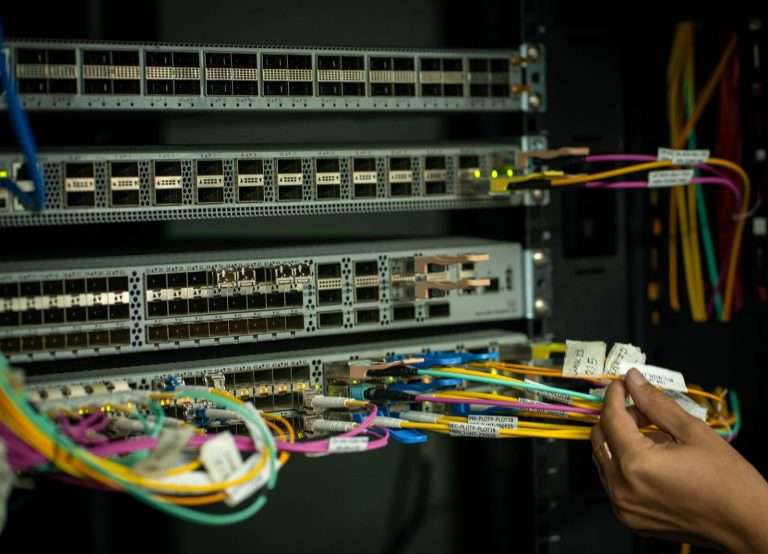

Introduction: The Business Connectivity Problem That Never Gets Talked About
If you have ever called your internet or phone provider during a service outage and found yourself navigating an automated system clearly designed for residential customers, waiting on hold for an hour, and finally being told that a technician can arrive sometime next Thursday, then you already understand the core problem this article is about.
Most of the large telecommunications companies operating across the United States were built for one primary market: residential consumers. Business services were added later — often as little more than a premium-priced version of the same infrastructure, slapped with a different label and a longer contract. For organizations that depend on their connectivity to operate — processing transactions, running cloud applications, hosting video conferences, managing distributed teams, and communicating with customers — this arrangement is not just inconvenient. It can be genuinely harmful.
There is a better way. And in Las Vegas, Nevada and across Southern California, that better way has a name: Cytranet.
Cytranet is a business-class fiber-optic internet service provider and licensed telecommunications carrier that has made a deliberate, unwavering commitment to serving one market and one market only: businesses, enterprises, government agencies, and commercial organizations. The company does not offer residential internet plans. It does not bundle streaming services or home phone packages. Every product, every service, every engineering decision, and every support process at Cytranet is built around the needs of organizations — not households.
In this article, we explore why that distinction matters more than most business owners and IT decision-makers realize, what Cytranet offers to its clients across Las Vegas and Southern California, and why the “business-only” model produces a fundamentally superior experience for the commercial customers it serves.
Who Is Cytranet? A Business-First Carrier Built for the Southwest
Cytranet is a Las Vegas, Nevada-based fiber-optic internet service provider and full-service licensed telecommunications carrier. Founded with an explicit focus on commercial and enterprise customers, Cytranet has grown into a trusted connectivity and technology partner for over 1,000 organizations across Nevada, Arizona, California, and the broader Southwest region.
The company’s headquarters are in Las Vegas, a city that has evolved far beyond its entertainment roots into a sophisticated metropolitan economy anchoring finance, healthcare, hospitality technology, logistics, manufacturing, and professional services. Las Vegas businesses demand enterprise-grade connectivity — and Cytranet was built specifically to deliver it.
Over recent years, Cytranet has expanded aggressively into Southern California, extending its fiber-backed services and telecommunications solutions across Los Angeles County and beyond. Southern California is home to some of the nation’s most bandwidth-intensive industries: media production and post-production, logistics, healthcare systems, financial services, manufacturing, and professional services firms of every size and shape. These organizations need a carrier that understands them. Cytranet’s expansion into the region reflects its “business-first build strategy” — targeting commercial demand, fiber-friendly pathways, and areas where enterprises have been chronically underserved by legacy infrastructure and large, consumer-oriented providers.
At the helm of Cytranet’s technical vision is Doug Roberts, the company’s Chief Technology Officer. Roberts brings decades of hands-on telecommunications engineering experience to his leadership role, and he is known for a deeply pragmatic perspective on what businesses actually need from their connectivity infrastructure. As Roberts has described it: “Businesses have been underserved for a long time. They’ve been handed the same consumer-grade product with a slightly higher price tag and told that’s business internet. It isn’t.” That candid acknowledgment — and the determination to do something about it — is central to Cytranet’s culture and competitive positioning.
The Problem with Carriers That Serve Both Residential and Business Customers
To appreciate why Cytranet’s business-only model is so valuable, it is worth spending a moment on what goes wrong when large, mixed carriers — those that serve both households and companies — try to address commercial connectivity needs.
1. Residential Infrastructure Was Not Designed for Business Traffic Patterns
Cable and DSL networks built for residential consumers are designed around a specific assumption: that users download far more than they upload, and that peak usage occurs during evenings and weekends when people are home. Business traffic looks completely different. Commercial organizations often need symmetrical bandwidth — equal upload and download speeds — because they are constantly pushing data to cloud platforms, sending large files, running video conferences in both directions, and syncing distributed systems. They also need to be productive during business hours, precisely when mixed-use networks are often more congested than carriers publicly acknowledge.
When a carrier builds its network to serve millions of residential subscribers, the engineering trade-offs are made with household users in mind. Business customers who purchase service on that network are essentially buying capacity that was never designed for them.
2. Support Structures Are Optimized for the Majority — Which Is Residential
Large carriers with millions of residential subscribers build their support infrastructure at a scale and with a process orientation driven by consumer expectations. That means automated phone systems, tiered support queues, limited evening and weekend availability for technical escalations, and technician dispatch windows measured in days rather than hours. A consumer who is without internet for a day is frustrated. A business that is without internet for a day can suffer significant financial losses, miss critical deadlines, fail to serve customers, and potentially damage relationships that took years to build.
When you call a mixed residential-business carrier and identify yourself as a business customer, you are often routed into a support system that is a slightly modified version of the same process used for residential customers. The sense of urgency simply does not match what a business environment requires.
3. Product Development Priorities Favor the Larger Market
Inside large carriers, product roadmaps and investment decisions are driven by the largest revenue segments. For most national carriers, residential customers represent a massive volume of accounts — even if each individual account generates modest revenue. Business services, particularly for small and mid-sized companies, may represent a smaller share of total revenue and therefore receive proportionally less engineering investment, product development attention, and infrastructure prioritization.
A carrier that exists exclusively to serve business customers does not face this tension. Every investment, every product enhancement, every piece of new infrastructure is justified entirely by its value to commercial clients.
4. Pricing Models Are Designed Around Consumer Behaviors
Residential internet pricing is typically built around promotional introductory rates, bundling incentives, and multi-year contracts with automatic price increases. Business customers are often subjected to similar structures — in some cases, carrier pricing models originally developed for households have simply been modified and labeled as “business plans” without the underlying structure changing meaningfully.
Organizations benefit from transparent, predictable pricing that matches their actual operational needs — not promotional structures designed to attract consumer sign-ups.
5. Service Level Agreements Often Lack Real Accountability
True carrier-grade service level agreements — the kind that specify uptime guarantees, mean time to repair, escalation procedures, and real financial consequences for failure to meet commitments — are often difficult to find or meaningfully enforce when dealing with large consumer-oriented carriers. Business-focused carriers, whose entire clientele depends on such guarantees, have a fundamentally different relationship with accountability.
Cytranet’s Business-Only Service Portfolio
Cytranet has built a comprehensive suite of telecommunications and technology services designed from the ground up for commercial customers. Here is a detailed look at what the company offers to businesses across Las Vegas and Southern California.
Dedicated Business Fiber Internet
At the core of Cytranet’s offering is dedicated, fiber-backed business internet service. Unlike shared residential cable broadband, Cytranet’s connections are engineered for the consistent, symmetric performance that business operations demand. The company’s fiber-rich network supports speeds ranging from 1.5 Mbps all the way to 40 Gbps — a range that accommodates everything from a small professional office to a large enterprise data facility with intensive bandwidth requirements.
These connections are built to support the full range of modern business applications: cloud platforms such as productivity suites, collaboration tools, CRM systems, and industry-specific SaaS tools; VoIP telephony; video conferencing systems; large file transfers; security camera feeds; and the growing demands of AI-driven workflows that require both high bandwidth and low latency. Cytranet’s network is also redundant and fault-tolerant, engineered so that no single point of failure can take down an organization’s connectivity.
Microwave and Fixed Wireless Internet
For locations where direct fiber-to-the-premises delivery is not yet available, Cytranet operates what it describes as the fastest microwave infrastructure across the Las Vegas Valley, supporting speeds from 1 Mbps to well over 1,000 Mbps. Cytranet’s microwave connectivity sends data directly through the air following the most direct possible path, resulting in fewer network hops, reduced latency, and a lower failure footprint compared to long terrestrial fiber runs through shared conduit. This makes microwave an excellent complement to fiber for businesses in locations where the economics or logistics of fiber provisioning present challenges.
Business VoIP and Unified Communications
Cytranet is not an internet-only provider. The company offers a full suite of advanced VoIP-based voice services designed specifically for business use, with over 100 premium features including call recording, voicemail-to-email, auto-attendants, call queuing, conference bridges, and more. Unlimited local and long-distance calling plans simplify budgeting with a single predictable monthly rate. Mobile extensions allow employees to use the business phone system on their mobile devices, and existing phone numbers can be ported so organizations do not need to change their established business contact information.
Cytranet also provides Hosted PBX solutions — cloud-based phone systems that eliminate the cost and complexity of on-premise hardware — and Unified Communications platforms that integrate voice, video, messaging, and collaboration tools into a single, cohesive environment. Built-in failover call routing ensures that voice services remain available even in the event of a local disruption, and fast provisioning (within 48 hours in standard cases) minimizes the time between signing and having a functioning system.
SIP Trunking
For businesses that already have on-premise PBX infrastructure and want to replace traditional analog or PRI phone lines with a more flexible, cost-effective alternative, Cytranet provides SIP trunking services. SIP trunks deliver carrier-grade voice capacity over Cytranet’s IP network, allowing organizations to scale their voice capacity up or down as their needs change, while consolidating their voice and data services with a single business-focused provider.
Managed IT Services and Technology Consulting
Cytranet’s capabilities extend well beyond connectivity and voice. The company provides a comprehensive portfolio of managed IT services designed to help businesses of all sizes maintain reliable, secure, and high-performing technology environments. This includes managed network security (including firewall management, endpoint protection, and AI-powered threat detection), network monitoring and management, IT consulting to optimize infrastructure, data backup and recovery services, and cabling installation for network infrastructure.
For organizations that lack dedicated internal IT staff, Cytranet can also serve as a Fractional CIO — providing strategic technology leadership and guidance without the overhead of a full-time executive hire. This service is particularly valuable for growing companies navigating digital transformation, evaluating cloud migration strategies, or trying to align their technology investments with their business objectives.
Cloud Computing and Data Center Services
Cytranet’s cloud services carry an industry-leading 99.99% reliability commitment, reflecting the carrier-grade standards the company applies across its entire portfolio. Whether an organization needs hosted infrastructure, cloud storage, or data center co-location capacity, Cytranet delivers connectivity and cloud resources optimized for the growing demands of AI workloads, edge computing, and modern enterprise applications. CTO Doug Roberts has been notably forward-looking on this front, emphasizing that as AI tools become central to how businesses operate, the quality of the underlying network becomes a critical performance variable — not merely a utility.
Managed Wi-Fi for Business Premises
Cytranet provides managed Wi-Fi solutions for commercial premises, including multi-tenant office buildings, hotels, and other complex environments. These solutions go beyond simply installing access points — Cytranet manages the entire wireless environment, from the fiber entry point to the last connected device, ensuring that business tenants and their employees experience consistent, high-performance wireless connectivity capable of handling simultaneous video calls, cloud application traffic, VoIP, security camera feeds, and the growing density of IoT devices in modern workplaces.
Private Data Transport and WAN Services
For organizations with multiple locations, distributed operations, or requirements for private, secure data transport between facilities, Cytranet offers private line circuits, WAN services, and dedicated transport solutions. These services are particularly valued by broadcast industry clients — television and radio stations, production facilities, and transmitter sites — who require guaranteed, mission-critical bandwidth for content distribution and remote operations. Cytranet’s regional expertise in Nevada, Arizona, California, and the Southwest translates directly into better-engineered solutions and faster problem resolution for these demanding clients.
Serving Las Vegas: Why Nevada’s Business Capital Deserves Better Connectivity
Las Vegas is frequently mischaracterized as a single-industry town. In reality, the Las Vegas metropolitan area is one of the Southwest’s most economically diverse markets. Healthcare systems, financial services firms, legal practices, construction and engineering companies, logistics operations, technology startups, and professional services organizations of every description call Las Vegas home — and all of them need connectivity that performs to commercial standards.
For years, many Las Vegas businesses have had limited options: large national carriers whose service quality and support processes were designed with residential customers in mind, or the patchwork of fiber availability that characterizes much of the valley’s commercial corridors. Cytranet has directly addressed this gap by building business-focused fiber infrastructure throughout the Las Vegas Valley and extending it to serve the specific commercial needs of organizations in one of the Southwest’s most important business markets.
Cytranet’s local presence in Las Vegas means that when something goes wrong — or when a business needs to scale up quickly — there are local engineers and support resources ready to respond. National carriers serving the Las Vegas market from distant operations centers simply cannot match the regional responsiveness that a locally headquartered carrier with deep Las Vegas infrastructure knowledge can provide.
Cytranet’s Las Vegas clients span a wide spectrum of industries and sizes. From small professional offices seeking reliable fiber connectivity and a business phone system, to large enterprises requiring multi-gigabit dedicated access, managed security, and SD-WAN capabilities across distributed locations — Cytranet’s portfolio has been built to serve the full range of Las Vegas’s commercial market.
Expanding Into Southern California: Bringing Business-Grade Connectivity to a Vast Commercial Market
Southern California represents one of the largest concentrations of commercial activity in the United States. Los Angeles County alone is home to hundreds of thousands of businesses across industries ranging from entertainment and media to logistics, healthcare, manufacturing, finance, and technology. The Inland Empire is one of the nation’s fastest-growing logistics and warehousing markets. Orange County and San Diego are home to significant biotech, defense, and financial services sectors. Across all of these markets, the story is often the same: legacy infrastructure built for residential mass-market delivery, insufficient competition in commercial corridors, and enterprises quietly tolerating connectivity that does not match their operational needs.
Cytranet has been extending its fiber-based services and telecommunications solutions throughout Southern California, with particular emphasis on Los Angeles County. The company’s approach in the region reflects the same “business-first build strategy” that has driven its success in Nevada: identifying areas where commercial organizations are underserved, building or extending infrastructure that specifically addresses business needs, and bringing the same carrier-grade service standards and business-focused support to Southern California enterprises.
For Southern California businesses, Cytranet’s expansion means access to dedicated fiber internet, business VoIP and Unified Communications, SIP trunking, managed IT services, and private data transport — all from a carrier that understands the commercial market and has no interest in the residential side of the business. As Doug Roberts, Cytranet’s CTO, has framed it: “Our goal is straightforward — bring true high-bandwidth capability to the places where companies are trying to grow, and where current options aren’t meeting the moment.”
For bandwidth-intensive industries like media production and logistics, the combination of Cytranet’s symmetrical fiber speeds, low latency, and business-grade support creates a meaningful operational advantage. A post-production facility moving large video files between locations, a logistics company coordinating real-time inventory systems across multiple warehouses, or a healthcare organization synchronizing patient data across clinic sites — all of these use cases benefit directly from infrastructure engineered for business demands rather than consumer convenience.
The Business-Only Advantage: What It Actually Means in Practice
The phrase “business-only carrier” is easy to say and easy to claim. What does it actually mean in practice for organizations that choose Cytranet?
Every Support Interaction Is with Someone Who Understands Your Stakes
When a Cytranet business client calls for support, the person on the other end of the line — and the systems and processes behind them — are built around the assumption that the organization calling cannot afford downtime. There is no residential support queue. There are no consumer-oriented scripts. The entire support infrastructure is calibrated to the urgency that commercial operations demand. As Cytranet’s CTO Doug Roberts has noted: “When your internet goes down, everything stops — your phones, your cloud apps, your ability to process a transaction.” That statement reflects a support culture organized around business reality, not consumer convenience.
Infrastructure Investment Is Aligned with Commercial Needs
Because Cytranet’s entire customer base consists of businesses and organizations, every infrastructure investment the company makes is justified by its value to commercial clients. There are no trade-offs between residential and commercial investment priorities. Fiber routes are planned with commercial corridors, business parks, and enterprise locations in mind. Network capacity planning accounts for business traffic patterns, not consumer peak-hour behavior. The entire engineering organization thinks about problems from a commercial perspective.
Products Are Designed for How Businesses Actually Operate
Cytranet’s product portfolio — from dedicated fiber internet to VoIP with 100-plus enterprise features, from SIP trunking to managed security and Fractional CIO services — reflects deep thinking about what commercial organizations need to operate effectively. These products were not adapted from residential offerings. They were built specifically for businesses, with the features, reliability standards, and scalability that enterprise environments require.
Regional Expertise Means Faster, Better Problem Resolution
National carriers serving large geographic areas often struggle with local responsiveness. Cytranet’s regional focus — Nevada, Arizona, California, and the Southwest — means that local technical expertise, carrier relationships, and support resources are genuinely accessible. When a business in Las Vegas or the Inland Empire needs urgent technical support, Cytranet’s regional infrastructure makes meaningful responsiveness possible in ways that a distant national provider with centralized dispatch cannot match.
Vendor Consolidation and Simplified Management
Cytranet’s comprehensive portfolio — covering internet, voice, managed IT, cloud, and security — allows businesses to consolidate multiple vendor relationships under a single, accountable provider. This simplification has real value: fewer vendor contracts to manage, a single point of contact for technical support, coordinated service delivery, and the ability to optimize connectivity and communications as an integrated system rather than a collection of independent components.
Cytranet’s Approach to AI-Era Connectivity
One of the areas where Cytranet’s business focus is most clearly expressed is in how the company thinks about the future of connectivity. CTO Doug Roberts has been vocal and thoughtful about the way artificial intelligence is reshaping what businesses need from their network infrastructure — and about how most organizations are only beginning to understand the implications.
As AI tools become embedded in business operations — from customer service automation to predictive analytics, from document processing to real-time decision support — the demands those tools place on network infrastructure become qualitatively different from traditional business applications. AI workloads involve continuous data synchronization, large model downloads and updates, inference requests that must be completed within tight latency windows, and the movement of large datasets between cloud regions and on-premises systems. These patterns stress networks in ways that residential-grade infrastructure simply was not designed to handle.
Roberts has put it plainly: “Businesses are discovering that their internet connection is now part of their compute stack. When you’re syncing data continuously, running inference, or moving large datasets between cloud regions and on-prem systems, the network stops being a utility and starts being a performance factor.”
Cytranet’s investment in low-latency fiber infrastructure, edge computing capacity, and high-density data center services is a direct response to this reality. The company is positioning itself not merely as an internet service provider but as a foundational infrastructure partner for businesses navigating the AI transition — ensuring that when organizations are ready to deploy AI-driven tools, the network underneath them is genuinely capable of supporting those workloads.
Who Does Cytranet Serve?
Cytranet’s client base reflects the diversity of the commercial markets it serves. While the company is committed to business and enterprise customers across all industries and sizes, it has developed particular expertise in several verticals:
- Small and Mid-Sized Businesses: Professional services firms, legal practices, accounting offices, medical clinics, and retail businesses that need reliable connectivity and a business phone system without the complexity and cost of a large enterprise procurement process.
- Enterprise Organizations: Large businesses with complex multi-location environments, high bandwidth requirements, and the need for dedicated internet access, SD-WAN, and managed security services.
- Federal, State, and Local Government: Cytranet serves federal civilian agencies, Veterans Affairs facilities, Bureau of Land Management offices, tribal government facilities, and other public sector organizations requiring telecommunications connectivity that meets government procurement standards.
- Broadcast Industry: Television stations, radio stations, production facilities, and transmitter sites across Nevada, Arizona, California, and the Southwest rely on Cytranet for dedicated fiber internet, private data transport, and engineering-level support services that their mission-critical broadcast operations demand.
- Healthcare Organizations: Medical groups, hospital systems, and clinic networks with data security requirements, uptime demands, and connectivity needs that exceed what general-market providers deliver.
- Commercial Real Estate: Multi-tenant office buildings, business parks, and commercial properties whose owners and operators want to provide their tenants with carrier-grade connectivity as a property amenity and competitive differentiator.
- Logistics and Manufacturing: Operations-intensive businesses that require consistent, high-availability connectivity to keep supply chains, inventory systems, and production processes running without interruption.
What Makes Cytranet Different from National Carriers
When businesses in Las Vegas or Southern California are evaluating their connectivity options, they typically encounter a small number of large national carriers — companies with brand recognition built largely on residential marketing campaigns — alongside a range of smaller regional providers. Cytranet occupies a distinct position in this landscape: a regional carrier with carrier-grade infrastructure and a comprehensive service portfolio, but with a singular commitment to commercial customers that the large national providers cannot credibly match.
Consider the following dimensions of difference:
| Dimension | National Residential-Business Carriers | Cytranet (Business-Only) |
|---|---|---|
| Customer Focus | Primarily residential; business is a secondary market | 100% business, enterprise, and government |
| Network Design | Built for consumer download-heavy traffic | Engineered for symmetric, always-on business traffic |
| Support Culture | Consumer-oriented processes adapted for business | Business-first, urgency-driven support |
| SLA Accountability | Often difficult to enforce; limited remedies | Carrier-grade agreements with real accountability |
| Local Expertise | Centralized operations, distant escalation chains | Regional focus; local infrastructure knowledge |
| Product Development | Driven by residential volume and consumer demand | Driven entirely by commercial customer needs |
| Vendor Consolidation | Often requires multiple vendors for full stack | Single provider for internet, voice, IT, cloud |
AI-Powered Security: Another Dimension of Cytranet’s Business Commitment
Beyond connectivity and voice, Cytranet has invested significantly in AI-driven network security capabilities — another dimension of its commitment to serving the specific and demanding needs of business and enterprise clients. Doug Roberts has led the rollout of advanced AI-powered threat detection tools across Cytranet’s network infrastructure, responding directly to the surge in cyberattacks targeting critical infrastructure, government networks, and the types of organizations that Cytranet serves.
The security challenge facing businesses today is fundamentally different from what it was even a few years ago. Nation-state actors and sophisticated ransomware groups have turned their attention to the sectors that Cytranet serves — healthcare, government, logistics, finance, and critical infrastructure. Cytranet’s layered approach — combining machine learning models trained on network traffic patterns, proactive threat hunting, and rapid incident response capabilities — reflects a security philosophy appropriate for the threat environment that commercial organizations actually face.
This is another area where a business-focused carrier’s investment priorities diverge sharply from those of a mixed residential-business provider. Residential customers have security needs, but those needs are qualitatively different from — and generally less acute than — the security requirements of a hospital network, a government agency, or a financial services firm. Cytranet’s security investments are calibrated to the commercial threat landscape because that is the only landscape the company needs to worry about.
Making the Switch: What Businesses Should Know
For businesses currently served by large national carriers — or by providers whose service quality has not kept pace with their operational needs — transitioning to a business-focused carrier like Cytranet is a practical and achievable step. Here is what that process typically looks like:
Step 1: Request a Network Assessment
Cytranet offers no-obligation network assessments for prospective clients. This is an opportunity to have Cytranet’s team review your current connectivity environment, identify gaps, and develop a customized proposal that addresses your specific operational requirements. Because the company’s team includes personnel with genuine telecommunications engineering backgrounds, these assessments tend to be substantive rather than superficial sales conversations.
Step 2: Understand Your Current Commitments
Before making a switch, review any remaining term commitments with your current provider. In many cases, the value of transitioning to better service outweighs the cost of an early termination, but it is important to understand the math clearly before proceeding. Cytranet’s team can help you think through this analysis.
Step 3: Plan the Transition
A well-planned transition minimizes disruption. For voice services, phone number portability allows you to retain your existing business numbers. For internet, Cytranet’s team can coordinate installation and cutover to minimize the window during which your organization is operating on the new connection without the full support of the old one still active. For complex multi-location environments, a phased transition approach may be appropriate.
Step 4: Consolidate Your Vendor Relationships
As part of the transition, consider consolidating any existing separate voice, internet, IT support, or security vendors under Cytranet’s integrated platform. The operational efficiency gains and simplified vendor management that result from this consolidation often represent meaningful ongoing savings in both time and money.
Frequently Asked Questions
Does Cytranet serve residential customers?
No. Cytranet is exclusively a business-class carrier. The company does not offer residential internet, home phone, or consumer services. Every service in Cytranet’s portfolio is designed for businesses, enterprises, government agencies, and commercial organizations.
What areas does Cytranet serve?
Cytranet is headquartered in Las Vegas, Nevada and serves markets across Nevada, Arizona, California, and the broader Southwest region. The company has been actively expanding its fiber footprint in Southern California, with particular focus on Los Angeles County. For specific service availability at your location, contact Cytranet’s team directly.
What internet speeds does Cytranet offer?
Cytranet’s fiber-backed internet services range from 1.5 Mbps to 40 Gbps, providing options for businesses of all sizes and bandwidth requirements. The company also offers high-speed microwave internet options for locations where direct fiber delivery is not available, with speeds exceeding 1,000 Mbps on its Las Vegas Valley microwave infrastructure.
Can I keep my existing phone numbers if I switch to Cytranet?
Yes. Cytranet supports full number portability for business phone numbers. Your existing telephone numbers can be ported to Cytranet’s VoIP platform, so you do not need to change your published business contact information when you switch providers.
How do I get started with Cytranet?
You can contact Cytranet directly by phone at 702-846-5000 or by visiting cytranet.com to request a free evaluation and learn more about available services for your location. Cytranet’s team will work with you to understand your connectivity requirements and develop a proposal tailored to your organization’s needs.
Conclusion: Your Business Deserves a Carrier Built for Business
The telecommunications market has long operated on the assumption that businesses can be served adequately by providers whose primary expertise, infrastructure, and support culture are oriented toward residential consumers. The evidence — in the form of unreliable connections, impersonal support, insufficient service level accountability, and products that do not match commercial operational needs — suggests otherwise.
Cytranet’s existence and growth represent a clear-eyed rejection of that assumption. By committing exclusively to business and enterprise customers, building infrastructure with commercial needs at the center of every decision, and hiring and training a team whose entire orientation is toward the urgency and complexity of commercial operations, Cytranet has built something genuinely different from what the large national carriers offer.
For businesses in Las Vegas and across Southern California — whether you are a small professional office, a growing enterprise, a healthcare organization, a government agency, or a broadcast facility — Cytranet offers the connectivity, voice services, managed technology, and security capabilities that your operations deserve: designed for business, delivered by people who understand business, supported with the urgency that business demands.
The market is changing, as CTO Doug Roberts observes. Organizations that are serious about their connectivity infrastructure — who understand that reliable, high-performance, secure connectivity is not a commodity but a strategic asset — are increasingly choosing providers who share that seriousness. Cytranet is that provider for Las Vegas and Southern California.
To learn more or to request a free evaluation for your business, contact Cytranet at 702-846-5000 or visit cytranet.com.
Talk to Cytranet
A business-only carrier for fiber internet, cloud voice, managed Wi-Fi, and managed IT. Start with a free technology evaluation.