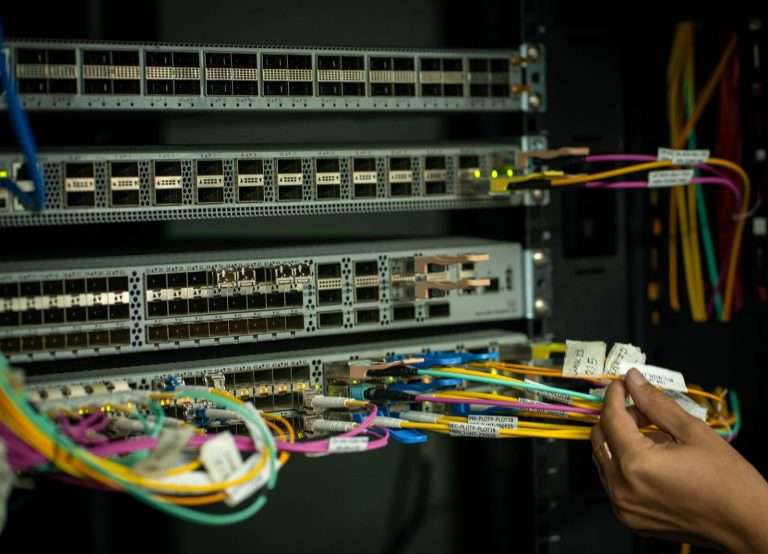
On the morning of August 7, 2026, Suisun City, California woke up to every IT leader’s worst-case scenario. A cyberattack tore through the city’s municipal network at roughly 5:45 a.m., compromising 911 call routing, police and fire dispatch, public records, and a range of online services. By the following day, the city council had unanimously declared a local state of emergency — and officials made the difficult but necessary call to take the entire IT network offline while investigators got to work.
It’s a stark reminder that cyberattacks are no longer just a private-sector problem, and no longer just a “someone else’s” problem. Here’s what happened, why it matters far beyond city limits, and what every organization — municipal or otherwise — should take away from it.
What Happened in Suisun City
According to city officials, the attack disrupted core municipal systems almost immediately, forcing emergency dispatchers to reroute 911 calls through the Solano County dispatch center while Suisun City’s own systems remained down. To contain the damage and preserve evidence, the city disconnected its network entirely — a drastic but often necessary step when an intrusion is active and its scope is still unknown.
City leaders are now working alongside the FBI, the Department of Homeland Security, and the California Governor’s Office of Emergency Services to determine how the attackers got in, what (if anything) was accessed, and how to safely bring systems back online. As of this writing, officials have not identified a suspect or confirmed whether any data was stolen. The good news: emergency services stayed operational throughout, and officials have reported no immediate threat to public safety.
A Pattern, Not an Isolated Incident
Suisun City is far from alone. Just last month, more than 30 water utilities across Minnesota were hit in a coordinated wave of attacks, part of a broader trend of threat actors targeting critical infrastructure and local government — sectors that historically have been under-resourced when it comes to cybersecurity. Industry researchers have also noted that the cost of recovering from a breach has climbed sharply in recent years, roughly doubling compared to just a couple of years ago, as attackers use more sophisticated tools and organizations scramble to rebuild trust, systems, and data after the fact.
Municipalities are attractive targets precisely because they sit at the intersection of sensitive data (resident records, court and police information, financial systems) and, in many cases, legacy technology and lean IT budgets. But the underlying lesson applies just as directly to small and mid-sized businesses: attackers don’t discriminate by size, they look for the path of least resistance.
Reactive vs. Proactive: The Difference That Matters Most
Every incident like this one comes back to the same uncomfortable truth: it’s always easier to find budget for cybersecurity after something goes wrong than before. That’s the trap of break-fix IT — waiting for something to break before you address it — versus proactive IT support, where a team is continuously monitoring, patching, and hardening your environment before an attacker ever gets a foothold.
Without a proactive plan in place, an incident doesn’t just cost you the technical cleanup. It costs you time, momentum, and clarity, as staff scramble to figure out what happened, what’s safe to use, and how to communicate with the people counting on you — residents, customers, employees, or all of the above.
How Cytranet Helps Organizations Stay Ahead of Threats Like This
This is exactly the gap Cytranet was built to close. As a managed voice, data, cloud, and IT services provider supporting more than 1,000 businesses, non-profits, and government institutions across all 50 states, we help organizations move from reactive firefighting to proactive resilience, including:
- 24/7/365 U.S.-based monitoring and support, so unusual activity gets flagged and addressed before it becomes a full-blown incident.
- Network security infrastructure covering firewalls, endpoint protection, multi-factor authentication (MFA), and zero-trust access policies.
- Managed IT services that keep systems patched, updated, and configured to current security standards, rather than left to drift.
- Data backup and disaster recovery solutions designed so that, even in a worst-case scenario, your organization has a clean, verified path back online.
- Cloud computing and hosting built around redundancy and reliability, reducing the blast radius if any single system is compromised.
- Employee cyber awareness training, because a well-informed team remains one of the strongest lines of defense against phishing and social engineering.
- Business continuity and incident response planning, so that if an attack does happen, your organization already knows who to call, what to prioritize, and how to communicate — instead of figuring it out in real time.
What You Can Do Right Now
You don’t need to wait for a headline like Suisun City’s to start strengthening your defenses. A few places to start:
- Audit your access controls. Confirm MFA is enabled everywhere it can be, and that former employees or vendors no longer have active credentials.
- Test your backups — don’t just take their existence for granted. A backup you haven’t tested is a backup you can’t fully trust.
- Write down your incident response plan. Who gets called first? Who talks to the public? Who has authority to take systems offline if needed?
- Train your team. Most breaches still start with a single click on a malicious link or attachment.
- Partner with a team that watches your network around the clock. Threats don’t keep business hours, and neither should your defenses.
The Bottom Line
Suisun City’s state of emergency is a sobering example of how quickly a cyberattack can bring essential services to a standstill — and how much harder recovery is without a plan already in place. Whether you’re running a city government, a healthcare practice, or a growing business, the same principle holds: proactive IT and security planning isn’t an expense, it’s the thing that keeps a bad day from becoming a full-blown crisis.
Cytranet has spent more than a decade helping organizations of every size build that kind of resilience, from network security and managed IT to cloud, backup, and 24/7/365 support. If it’s been a while since your organization stress-tested its own defenses, there’s no better time than now. Reach out to our team to talk through where your gaps might be.
Talk to Cytranet About Your Business Connectivity
Cytranet is a Las Vegas-based licensed telecommunications carrier providing dedicated fiber internet, fixed wireless, business VoIP and hosted PBX, managed Wi-Fi, colocation, and two-way radio solutions to businesses, nonprofits, and government organizations across Nevada, Arizona, California, and the broader Southwest. To discuss your needs with our team, call 702-846-5000 or email info@cytranet.com.
Talk to Cytranet
A business-only carrier for fiber internet, cloud voice, managed Wi-Fi, and managed IT. Start with a free technology evaluation.