
How One Regional Telecom Provider Is Betting Big on AI-Driven Network Security
When Doug Roberts picks up the phone, he sounds like a man who has not slept much lately, but not because anything is going wrong. Quite the opposite. The chief technology officer of Cytranet, a telecom and internet services provider that serves business, government, and enterprise customers, has spent the better part of the last several months overseeing a major rollout of artificial intelligence tools across the company’s network security infrastructure, and he is eager to talk about it.
“We started seeing the threat landscape shift dramatically about eighteen months ago,” Roberts said during a recent conversation. “The volume and sophistication of attacks targeting our government and enterprise clients went through the roof. Traditional firewall and intrusion detection approaches were not keeping up. We knew we had to move faster.”
That urgency led Cytranet to invest heavily in machine learning models that can detect anomalous traffic patterns in real time, automatically isolating suspicious activity before it reaches a customer’s network. Roberts said the system has already prevented several significant incidents for clients, though he declined to name specific organizations for security reasons.
The timing feels relevant. Across the telecom industry, providers large and small are grappling with an increasingly hostile cybersecurity environment. Recent reports of state-sponsored intrusions into major carrier networks have put the entire sector on alert, and smaller regional providers like Cytranet are finding themselves needing to punch well above their weight when it comes to defense.
“There is a misconception that because we are not one of the giant national carriers, our customers are somehow less of a target,” Roberts said. “That is completely wrong. Government agencies and enterprises that rely on us are handling sensitive data every single day. If anything, attackers sometimes see regional providers as softer targets. We refuse to be a soft target.”
Roberts has been with Cytranet for over a decade, and he said the current moment feels like an inflection point not just for his company but for the broader industry. He pointed to the rapid convergence of AI, fiber network expansion, and edge computing as forces that are reshaping what customers expect from their telecom provider.
“Five years ago, a business client wanted reliable internet and maybe a managed voice solution. That was the baseline,” he said. “Now they come to us asking about zero-trust architecture, SD-WAN optimization, AI-powered monitoring, disaster recovery that actually works. The bar has moved enormously.”
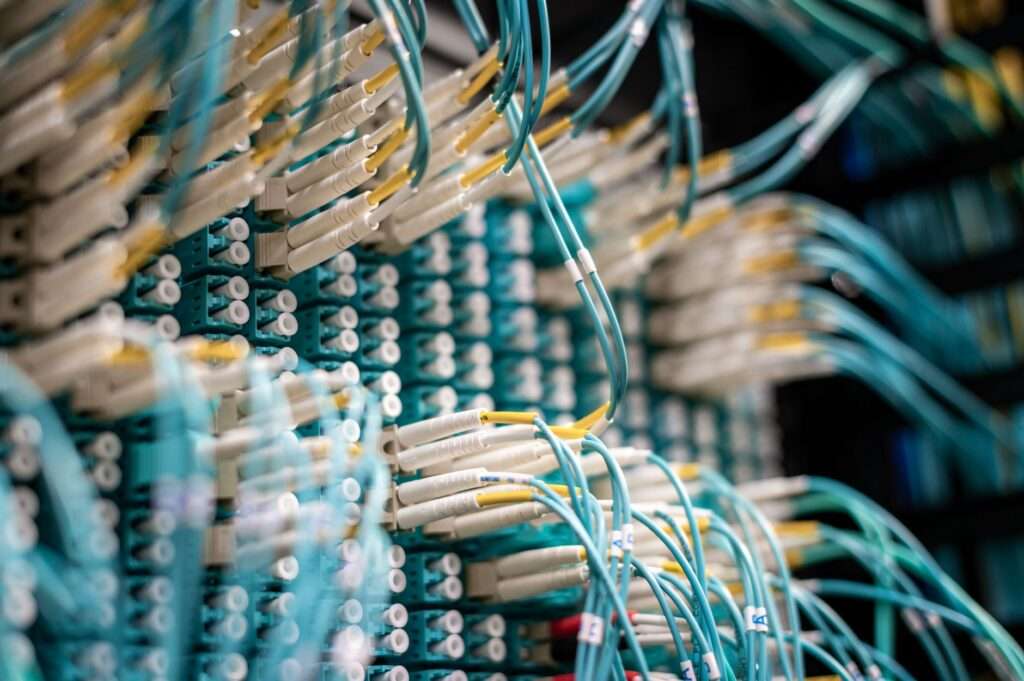
One area where Roberts is particularly enthusiastic is the company’s ongoing fiber buildout. Cytranet has been expanding its fiber footprint to serve more enterprise and government customers, and Roberts said that investment is paying dividends now that bandwidth demands are surging thanks to cloud computing, video conferencing, and the growing use of AI applications that require massive data throughput.
“You cannot deliver next-generation services on last-generation infrastructure,” he said. “Every dollar we put into fiber is a dollar that makes everything else we do possible. AI-driven security, real-time analytics, ultra-low-latency connections for mission-critical applications, all of it rides on that fiber backbone.”
Roberts also addressed a topic that has been dominating headlines across the tech world, the explosion of generative AI and what it means for network demand. He said Cytranet has already seen a measurable increase in bandwidth consumption among enterprise clients that are deploying large language models and other AI tools internally.
“We had one government client whose data usage jumped forty percent in a single quarter after they started integrating AI into their operations,” he said. “That is not an outlier. We are seeing that pattern repeat. Providers who are not planning for that kind of growth are going to find themselves in trouble.”
Despite the challenges, Roberts struck an optimistic tone about where Cytranet and the industry are headed. He said the company is actively hiring engineers and network architects, and he sees the current environment as an opportunity rather than a threat.
“This is honestly the most exciting time I have experienced in telecom,” he said. “The customers who trust us with their networks are doing incredible things, and our job is to make sure the technology underneath them never becomes the bottleneck. That is what gets me out of bed in the morning, even when I have not gotten enough sleep.”
He laughed at that last part. It was the laugh of someone who knows the hard work is paying off.