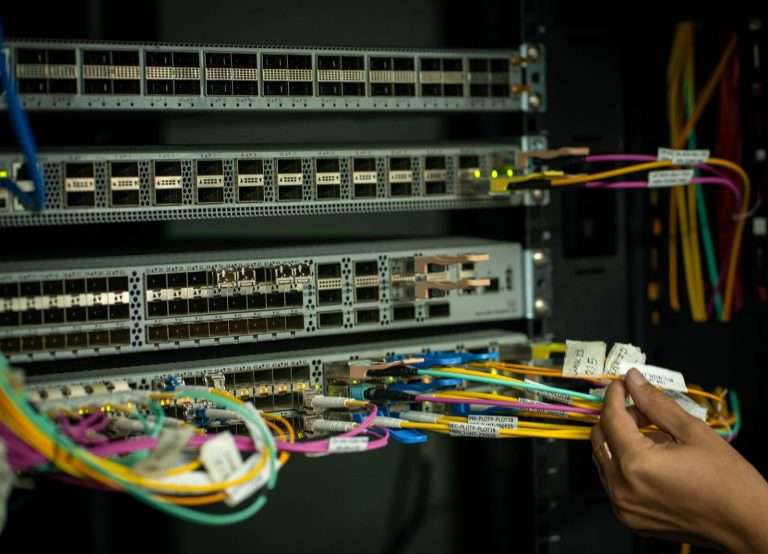

The Network Behind the Broadcast
Every time a viewer tunes into a local evening newscast, every time a listener catches their favorite morning show on the radio, and every time a breaking news alert reaches a screen or speaker within seconds of an event unfolding — there is a sophisticated, high-performance telecommunications infrastructure operating quietly and reliably behind the scenes. Broadcast-grade connectivity is not simply a matter of plugging in a cable and hoping for the best. It demands precision engineering, carrier-grade reliability, dedicated bandwidth, and a Service Provider who genuinely understands the unique and often unforgiving demands of the broadcast environment.
That is exactly where Cytranet steps in.
Cytranet is a Las Vegas, Nevada-based business-class fiber-optic Internet Service Provider and licensed telecommunications carrier serving markets across Nevada, Arizona, California, and the broader Southwest region. Over the years, Cytranet has built a distinguished and growing portfolio of broadcast industry clients — spanning television stations, radio stations, production facilities, transmitter sites, and auxiliary broadcast operations — providing them with the dedicated connectivity, private data transport, and engineering-level support services that their operations demand. Today, Cytranet proudly serves dozens of broadcast industry clients across its service footprint, and that number continues to grow.
This article explores the Full Range of connectivity and data transport solutions Cytranet delivers to the broadcast industry, the specific technical challenges that broadcast environments present, And Why Cytranet’s boutique approach to service delivery has made it a trusted partner for broadcast engineers and operations managers throughout the region.
Understanding the Unique Connectivity Demands of Broadcast Facilities
Before diving into Cytranet’s specific solutions, it is important to appreciate just how different a broadcast facility’s connectivity needs are from those of a typical business.
A conventional commercial enterprise — a law firm, a retail operation, a financial services company — typically requires Reliable Internet access for email, cloud applications, and web browsing. Downtime is inconvenient and costly, but it is generally survivable for short periods.
A broadcast television or radio station operates in an entirely different paradigm. Consider the following realities of the broadcast environment:
Real-time, live content delivery requires connections that are not merely fast, but deterministic — meaning they must deliver consistent, predictable throughput and latency at all times, not just during off-peak hours. A live newscast cannot buffer. A radio morning show cannot pause while a packet is re-routed.
Contribution feeds and return paths — the circuits that carry raw video and audio from remote locations back to the station’s master control — must be private, low-latency, and jitter-free. Standard commercial broadband, which is shared among thousands of subscribers, is simply not engineered for this purpose.
Transmitter site connectivity is a specialized challenge in its own right. Tower sites, antenna farms, and remote transmitter locations are often in geographically isolated areas, yet they must maintain continuous, reliable data connections for STL (Studio-to-Transmitter Link) backup paths, remote monitoring and control systems, EAS (Emergency Alert System) relay networks, and RBDS/RDS data injection.
Redundancy and failover architecture is not optional in broadcast — it is fundamental. Regulatory obligations, advertiser relationships, and audience trust all depend on stations staying on the air. Broadcast engineers demand connectivity solutions with clearly defined, diverse failover paths and rapid restoration protocols.
Security and isolation of content distribution is another critical concern. News footage, unaired program content, proprietary automation data, and commercial materials flowing across a facility’s network must be handled in protected, private environments — not over the public Internet.
Cytranet was built to address precisely these requirements, and its team has spent years developing the technical expertise and network infrastructure to serve the broadcast community at the highest level.
Cytranet’s Core Broadcast Connectivity Solutions
1. Dedicated Fiber-Optic Internet Access for Broadcast Facilities
Cytranet’s flagship offering for broadcast clients is dedicated, symmetrical fiber-optic Internet access — a service designed from the ground up for facilities that simply cannot Afford to share bandwidth with their neighbors.
Unlike residential or entry-level commercial broadband products, Cytranet’s dedicated fiber circuits deliver:
- Symmetrical upload and download speeds, which Is Essential for broadcast facilities that push as much — or more — data upstream as they consume downstream. Live streaming, contribution feeds, cloud backups of news footage, and FTP delivery of commercial content all require robust upstream capacity.
- Committed Information Rate (CIR) guarantees, meaning the bandwidth a broadcast client purchases is the bandwidth they actually receive, 24 hours a day, seven days a week — not a theoretical maximum that degrades at peak hours.
- Low-latency, low-jitter performance optimized for real-time applications, including live video encoding, remote production workflows, and IP-based audio distribution.
- Carrier-grade Service Level Agreements (SLAs) that define uptime commitments, response times, and restoration windows in writing — because in broadcast, every minute of downtime has a measurable cost.
- Fiber-based physical infrastructure, providing inherently superior reliability compared to copper or hybrid-coaxial networks, with resistance to electrical interference, weather-related degradation, and signal attenuation over distance.
Cytranet’s Fiber Internet services are available at a wide range of capacity tiers, from 100 Mbps symmetrical circuits for smaller radio stations and production boutiques all the way up to multi-gigabit enterprise circuits for full-power television broadcasters with complex Multi-Site Operations.
2. Private Data Line Transport Services — the Backbone of Broadcast Operations
Perhaps the most technically specialized service Cytranet provides to the broadcast industry is its private data line transport, also referred to as dedicated private circuits or Ethernet Private Line (EPL) services. These are point-to-point or multipoint-to-multipoint private network connections that carry a client’s data entirely within Cytranet’s own network infrastructure — never touching the public Internet.
For broadcast clients, private data line transport unlocks capabilities that simply cannot be replicated over shared or public networks:
Studio-to-Transmitter Link (STL) Backup and Primary IP Transport The STL is the critical link that carries program audio (and increasingly video and data) from the broadcast studio to the transmitter site. Traditionally handled by licensed microwave radio links, an increasing number of stations are deploying IP-based STL systems that ride over dedicated private circuits. Cytranet provides the low-latency, high-availability private circuits that make IP STL deployments reliable and FCC-compliant. When a microwave STL fails — due to equipment malfunction, weather events, or physical obstruction — a Cytranet PRIvate circuit can serve as the primary or backup transport path, keeping the station on the air.
Inter-Facility Data Transport and LAN Extension Television groups and radio clusters operating multiple stations in a market frequently need to move large volumes of data between facilities — news content, automation files, commercial spots, audio productions, and network configurations. Cytranet’s private circuits provide the equivalent of a dedicated fiber cable running between buildings, giving broadcast clients the speed and security of an internal network even across geographically separated facilities.
Remote Production and Remote Contribution Feeds The modern broadcast newsroom relies heavily on live shots, remote production units, and field contribution feeds. Cytranet can provision private circuit extensions to remote locations, sports venues, government facilities, and other frequently used live-shot positions, giving stations the infrastructure to execute high-quality remote productions without dependence on public Internet paths that introduce unpredictable latency and packet loss.
Disaster Recovery and Backup Operations Center Connectivity Regulatory requirements and good engineering practice demand that broadcast stations have defined disaster recovery capabilities. Cytranet’s private circuits provide the secure, low-latency interconnection between primary facilities and backup operations centers, ensuring that programs can continue even if a primary location is compromised.
Cloud and Off-Site Media Asset Management As broadcasters migrate more of their media asset management, automation systems, and archive storage to cloud environments, the need for fast, reliable, private connectivity to cloud data centers has grown dramatically. Cytranet provides private transport circuits that connect broadcast facilities directly to regional cloud Points of Presence (PoPs), avoiding the congestion and security exposure of public Internet paths for mission-critical media workflows.
3. Multi-Site Network Design and Private MPLS/Ethernet Services
For television station groups, radio clusters, and broadcast companies managing multiple properties across Cytranet’s service territory, the company offers multi-site private network solutions built on Ethernet Private LAN (EPLAN) and MPLS-based architectures.
These solutions allow a broadcast company to connect all of its facilities — studios, transmitter sites, tower locations, sales offices, and production centers — into a single, unified private network, with guaranteed bandwidth allocations between each site, centralized management, and the ability to carry voice, video, data, and operational control traffic over a common infrastructure.
The benefits for broadcast operations are substantial. Engineering teams can remotely access transmitter control systems, automation servers, and broadcast equipment at any location on the network. IT teams can push software updates, security patches, and configuration changes to all sites simultaneously. Finance and traffic departments can access shared business systems without relying on VPN tunnels over the public Internet. And master control operators can monitor and, where appropriate, remotely manage transmitter equipment from a centralized hub.
Boutique Engineering and Technical Support Services for the Broadcast Industry
What truly distinguishes Cytranet from larger, less specialized carriers is its boutique approach to engineering and technical support. Cytranet does not simply provision a circuit and walk away. The company’s technical team engages directly with broadcast engineers, IT managers, and operations personnel to design, deploy, and support connectivity solutions that are tailored to the precise needs of each facility.
Pre-Deployment Engineering Consultation
Before a single fiber strand is lit, Cytranet’s team works with broadcast clients to conduct a thorough assessment of the facility’s existing infrastructure, traffic patterns, redundancy requirements, and future growth plans. This consultation results in a formal network design recommendation that takes into account the specific applications the facility operates — whether that is an IP audio network system, a broadcast automation system, a bonded cellular backup solution, or a complex multi-codec video contribution architecture.
This engineering-first approach ensures that Cytranet’s circuits are specified correctly from the start, eliminating the costly trial-and-error that can plague broadcast connectivity projects managed by carriers with no broadcast industry expertise.
Custom SLA Structures for Broadcast-Grade Requirements
Cytranet recognizes that a four-hour restoration window — which might be perfectly acceptable for a typical commercial customer — is categorically unacceptable for a broadcast facility. The company works with broadcast clients to structure custom Service Level Agreements that reflect the true operational requirements of their facilities, including defined escalation paths to senior engineering personnel, priority dispatch for on-site restoration events, and coordination with Cytranet’s upstream carrier partners when issues extend beyond Cytranet’s own infrastructure.
Redundancy Architecture and Diversity Planning
A core element of Cytranet’s broadcast service offering is its commitment to helping clients design and implement true physical diversity in their connectivity. This means ensuring that primary and backup circuits do not share the same physical fiber routes, the same conduit systems, or the same points of network aggregation — a level of diligence that requires detailed knowledge of local outside plant infrastructure and a willingness to go the extra mile in circuit routing.
For broadcast clients, Cytranet routinely designs solutions that combine fiber-based primary circuits with alternative transport technologies — including fixed wireless point-to-point links and bonded cellular solutions — to create layered redundancy architectures that approach the “five nines” (99.999%) availability that broadcast operations require.
On-Site Technical Coordination and Integration Support
When a broadcast facility is deploying new IP infrastructure — whether migrating from legacy serial audio distribution to AES67/AES70 IP audio, transitioning from traditional ISDN codecs to SIP-based contribution systems, or implementing a new SMPTE 2110 IP video production environment — Cytranet’s technical team can coordinate directly with the station’s broadcast engineers and third-party system integrators to ensure that the network layer is properly configured to support the application layer. This includes proper VLAN segmentation, QoS (Quality of Service) marking and enforcement, multicast configuration for IP audio and video distribution, and IGMP snooping configuration for efficient multicast traffic management.
Cytranet’s Broadcast Client Portfolio: Dozens of Stations and Facilities Served
Cytranet has built its broadcast industry reputation one engineering relationship at a time. Today, the Company serves dozens of broadcast industry clients across its Southwest service territory, including:
- Full-power television stations, including network affiliates and independent stations, requiring high-capacity dedicated Internet and private data transport for news operations, automation connectivity, and remote production.
- FM, AM, and HD Radio stations, from heritage full-power Class C stations to LPFM community broadcasters, each with unique connectivity needs tied to their specific technical plants and operational models.
- Broadcast production and post-production facilities, requiring high-throughput connections for media file delivery, cloud-based editing workflows, and remote collaboration.
- Transmitter sites and tower locations, where Cytranet provides the private circuits and backup Internet connections that allow engineering teams to remotely monitor and manage critical transmission infrastructure.
- Network O&O facilities and regional broadcast groups, leveraging Cytranet’s multi-site private network solutions to connect multiple properties into a unified, managed infrastructure.
Each of these clients benefits not only from Cytranet’s technical capabilities, but from the company’s deep understanding of the broadcast industry’s culture, schedule, and operational expectations. Broadcast engineers work unusual hours, deal with emergency situations at a moment’s notice, and require a carrier that is genuinely responsive when it matters most. Cytranet has built its reputation on being that kind of carrier.
Why Broadcast Engineers and Operations Managers Choose Cytranet
When broadcast professionals evaluate connectivity providers, they are not simply comparing prices on a commodity product. They are making a critical infrastructure decision that will directly affect their station’s ability to serve its community, fulfill its regulatory obligations, and maintain the trust of its audience. The selection criteria they apply are rigorous — and Cytranet consistently meets them.
Carrier-grade network infrastructure — Cytranet operates as a licensed telecommunications carrier with its own network infrastructure, not as a reseller of another provider’s services. This means the company has direct control over circuit provisioning, performance management, and fault restoration — a critical distinction when a broadcast client needs a problem solved at 2:00 a.m. on a Saturday.
Southwest regional expertise — As a Nevada-headquartered carrier with operations across Nevada, Arizona, California, and adjacent markets, Cytranet has deep knowledge of the regional telecommunications infrastructure, the local fiber plant, and the specific geographic and operational challenges that Southwest broadcasters face. This regional expertise translates into better-engineered solutions and faster, more effective problem resolution.
Broadcast industry knowledge — Cytranet’s technical team includes personnel with genuine broadcast and telecommunications engineering backgrounds. When a broadcast engineer calls to discuss STL backup routing, IP multicast configuration, or SIP trunk integration for a codec network, they are speaking with professionals who understand the context and the stakes — not a general-purpose helpdesk representative reading from a script.
Boutique service culture — As a company built on relationship-driven, client-specific service delivery, Cytranet does not disappear after contract signing. Broadcast clients have direct access to senior technical personnel, receive proactive communication about network events that may affect their facilities, and benefit from an organizational culture where their success is genuinely important to the people serving them.
Flexibility and scalability — Broadcast technology evolves rapidly. IP-based production workflows that were experimental five years ago are now standard. The bandwidth requirements of a news operation today are dramatically different from what they were a decade ago, and they will continue to grow. Cytranet’s fiber-based infrastructure and carrier-grade platforms are built to scale with clients’ needs, ensuring that today’s investment in connectivity infrastructure remains relevant as operational requirements evolve.
Looking Ahead: the Future of Broadcast Connectivity in the Southwest
The broadcast industry is undergoing a period of profound technological transformation. The adoption of ATSC 3.0 (NextGen TV) is expanding broadcasters’ data delivery capabilities and creating new demands for high-capacity, low-latency backhaul. The migration to cloud-based master control and production is placing unprecedented demands on the WAN connections that link broadcast facilities to cloud environments. The growth of OTT (Over-the-Top) streaming as a primary or secondary distribution platform requires broadcasters to maintain robust, high-throughput Internet connections that can simultaneously support linear broadcast production and streaming content delivery.
Cytranet is investing in its network infrastructure and its technical expertise to be ready to support broadcast clients through all of these transitions. The company is actively expanding its fiber footprint in key Southwest markets, developing new service offerings tailored to cloud-based broadcast workflows, and deepening its partnerships with broadcast technology vendors to ensure seamless integration between Cytranet’s connectivity services and the application platforms its clients operate.
The broadcast industry has always been defined by its commitment to staying on the air, serving its community, and delivering quality content under any circumstances. Cytranet shares that commitment — and is proud to be the telecommunications partner that helps make it possible.
Get in Touch with Cytranet’s Broadcast Services Team
If you are a broadcast engineer, operations manager, or technology executive responsible for connectivity at a television station, radio station, or broadcast production facility in Nevada, Arizona, California, or the surrounding Southwest region, Cytranet invites you to start a conversation.
Our team is ready to discuss your facility’s specific requirements, conduct a no-obligation network assessment, and develop a customized proposal for dedicated fiber Internet, private data line transport, or multi-site network services tailored to the unique demands of your broadcast operation.
Talk to Cytranet About Your Business Connectivity
Cytranet is a Las Vegas-based licensed telecommunications carrier providing dedicated fiber internet, fixed wireless, business VoIP and hosted PBX, managed Wi-Fi, colocation, and two-way radio solutions to businesses, nonprofits, and government organizations across Nevada, Arizona, California, and the broader Southwest. To discuss your needs with our team, call 702-846-5000 or email info@cytranet.com.
Talk to Cytranet
A business-only carrier for fiber internet, cloud voice, managed Wi-Fi, and managed IT. Start with a free technology evaluation.