Ask a prospective resident what they expect from an apartment community and reliable internet lands near the top of the list, right beside parking and in-unit laundry. That expectation has changed how owners, developers, and property managers think about connectivity. Instead of leaving each resident to arrange service on their own, more communities are working with a multifamily internet provider that delivers one professionally managed network to the entire property. This guide explains how multifamily internet works, how bulk internet agreements are structured, what the network behind them should look like, and how Cytranet supports apartment communities, condominiums, student housing, and other multi-dwelling properties nationwide.
What Is a Multifamily Internet Provider?
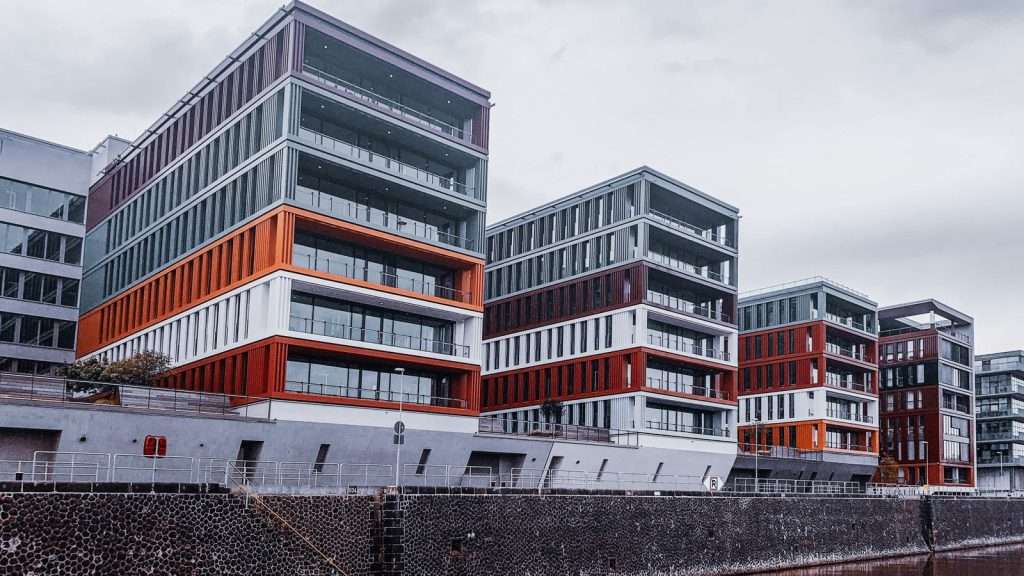
A multifamily internet provider is a carrier that designs, installs, and operates internet service for a residential property as a whole rather than selling one connection at a time to individual households. The provider contracts with the property owner or homeowners association, brings dedicated capacity to the building or campus, and distributes that capacity to every unit and common space over infrastructure built specifically for the property.
The difference from a traditional residential subscription is significant. In the retail model, each resident signs up separately, schedules an installation appointment, and brings a personal router that competes with dozens of neighboring routers for the same airwaves. In the multifamily model, service is already live on move-in day, the wireless network is engineered as a single coordinated system, and one accountable provider supports the whole community.
Bulk Internet vs. Retail Internet: How the Models Compare
Most multifamily internet is delivered under a bulk agreement, in which the property purchases service for every unit and either includes it in rent or bills it as a technology amenity. The comparison below shows why the model has become so common.
| Consideration | Retail (resident-by-resident) | Bulk multifamily internet |
|---|---|---|
| Activation | Resident orders service and waits for installation | Service is active the day the resident moves in |
| Wi-Fi design | Individual routers that interfere with one another | Professionally engineered, property-wide wireless coverage |
| Billing | Separate accounts, deposits, and credit checks | One agreement between the property and the carrier |
| Support | Each resident calls a different provider | One provider accountable for the entire network |
| Building systems | No shared network for access control or sensors | A common backbone for smart-building technology |
| Owner involvement | Minimal control over the resident experience | Service levels defined in a contract the owner negotiates |
Why Owners and Operators Are Moving to Bulk Internet
Leasing and Retention
Connectivity influences leasing decisions. A community that can advertise instant-on internet and property-wide Wi-Fi removes a move-in chore and gives leasing teams a concrete amenity to present during tours. Residents who work from home, attend classes online, or stream entertainment every evening notice quickly when a network performs well, and they notice even faster when it does not.
Predictable Economics
Because the property purchases capacity at scale, the per-unit cost of bulk internet is generally lower than what residents would pay on their own for comparable service. Owners can treat connectivity as an amenity built into rent or as a separate technology line item, and the arrangement can contribute to the financial performance of the asset. The right structure depends on the market, the resident profile, and the property’s business plan.
A Foundation for Smart-Building Technology
Smart locks, access control, leak sensors, connected thermostats, surveillance cameras, and package systems all depend on a dependable network. A property-wide network gives those systems a secure, managed home instead of leaving them on an improvised connection in a maintenance closet. Communities that plan to add this kind of technology benefit from getting the network right first.
Operational Simplicity
One provider, one agreement, and one support path reduce the time property staff spend refereeing connectivity complaints. When the leasing office, fitness center, pool deck, and clubhouse all run on the same managed network, staff members are not left troubleshooting a patchwork of unrelated services.
The Regulatory Picture for Bulk Billing
Owners often ask whether bulk billing is still permitted. In early 2025 the Federal Communications Commission withdrew a proposal that would have restricted bulk-billing arrangements in multi-tenant environments, so the model remains available to property owners across the country. That said, state law, local ordinances, lease language, and disclosure practices all matter, and the rules can differ from one jurisdiction to the next. Owners should review any bulk arrangement with qualified legal counsel and make sure residents receive clear information about what is included with their home.
What the Network Behind Multifamily Internet Should Look Like
A bulk agreement is only as good as the engineering behind it. The strongest multifamily networks share several characteristics.
- Dedicated fiber to the property. A dedicated fiber connection with symmetrical upload and download capacity gives the community a backbone that can be upgraded as demand grows, without rebuilding the last mile.
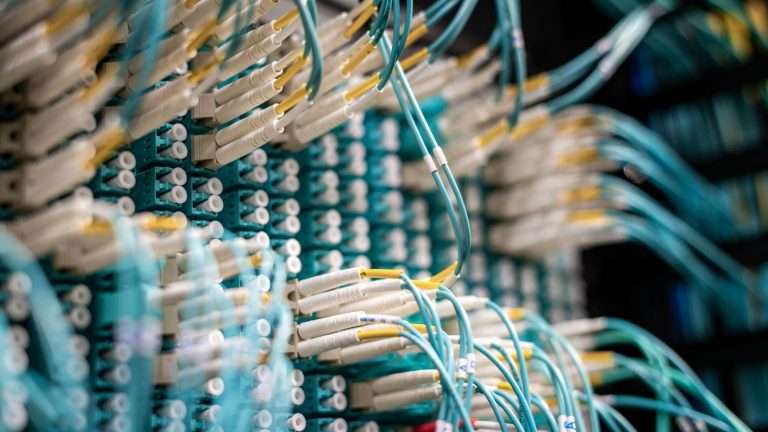
- Structured in-building distribution. Fiber or high-grade Ethernet cabling to each floor and unit keeps wireless access points fed with reliable wired backhaul.
- Engineered wireless coverage. A predictive design and an on-site survey determine where access points belong so that coverage reaches units, corridors, amenity spaces, garages, and outdoor areas.
- Private networks for each resident. Every household should receive its own secure, segmented network so that personal devices are never visible to neighbors, even though the infrastructure is shared.
- Separate lanes for building systems. Access control, cameras, and sensors belong on their own isolated network segments.
- Proactive monitoring. The provider should see a failing access point or a saturated link before residents begin calling the office.
- Resilience. For larger communities, a secondary path such as fixed wireless or an automatic internet failover service protects residents from a single cut cable.
Questions to Ask a Multifamily Internet Provider
Before signing a multi-year agreement, owners and asset managers should ask every candidate provider the same set of questions.
- Is the connection to the property dedicated, or is it shared with the surrounding neighborhood?
- How much capacity is delivered on day one, and how is it increased as usage grows?
- Who owns the in-building infrastructure at the end of the term?
- What service levels apply to uptime, repair times, and resident support, and what remedies exist if they are missed?
- How are residents supported, and during what hours?
- How is each resident’s traffic isolated from every other resident’s?
- Can the network support access control, cameras, and other building systems?
- What happens during construction, renovation, or a change in ownership?
Clear answers to these questions reveal whether a provider is offering a true carrier-grade service or simply reselling a residential connection at volume.
How a Multifamily Internet Deployment Unfolds
Every property is different, but a well-run project generally follows the same sequence.
- Discovery. The provider reviews floor plans, unit counts, construction materials, existing cabling, and the owner’s goals for the asset.
- Design. Engineers produce a network design covering the fiber entrance, equipment rooms, cabling pathways, and access point placement.
- Construction and installation. Fiber is extended to the property, distribution cabling is installed, and equipment is mounted and configured. On new developments this work is coordinated with the general contractor’s schedule.
- Validation. Coverage and performance are tested unit by unit and in every amenity space before the network is turned over.
- Ongoing operations. The provider monitors the network, supports residents, and reports to ownership on performance.
How Cytranet Serves Multifamily Communities
Cytranet is a licensed telecommunications carrier that serves businesses, government agencies, and property owners nationwide, with data centers in Las Vegas, Los Angeles, Phoenix, Dallas, and Chicago. Cytranet does not sell individual residential subscriptions. Instead, it works directly with owners and operators of multi-dwelling properties through bulk billing arrangements, which means the property has a single carrier relationship and a single point of accountability.
For multifamily clients, Cytranet’s work typically includes dedicated fiber or fixed wireless connectivity to the property, managed Wi-Fi engineered for full-property coverage, structured cabling, and voice service for leasing offices and on-site staff. The same team can support multi-dwelling properties ranging from garden-style apartments to student housing, senior living, and military dormitories. Readers who want more technical depth can review Cytranet’s overview of MDU internet and Wi-Fi solutions.
“In a multifamily community the network is an amenity the resident touches every single day, so it has to be engineered rather than improvised. When we design bulk internet for a property, we start with dedicated capacity and a coverage plan for every unit, and then we stay accountable for how it performs long after move-in day.” — Doug Roberts, Manager and CTO, Cytranet
Frequently Asked Questions
What is bulk internet in an apartment community?
Bulk internet is an arrangement in which the property owner purchases internet service for every unit from a single provider. Residents receive service as part of their housing, usually active from the day they move in, rather than ordering it individually.
Is bulk internet the same as managed Wi-Fi?
Not exactly. Bulk internet describes how the service is purchased. Managed Wi-Fi describes how it is delivered, with a provider designing, installing, monitoring, and supporting the wireless network across the property. Many communities combine the two.
Are residents’ devices private on a shared property network?
They should be. A properly designed multifamily network gives each household its own segmented network, so one resident’s devices cannot see or reach another resident’s devices.
Can an existing property be converted to bulk internet?
Yes. Existing communities are converted regularly. The provider evaluates the cabling already in the building, determines what can be reused, and schedules installation to minimize disruption to current residents.
How much capacity does a multifamily property need?
Capacity depends on the number of units, the resident profile, and the building systems that share the network. A dedicated fiber connection allows the property to begin with an appropriate level of capacity and increase it as usage grows.
Does Cytranet serve individual apartment residents?
No. Cytranet is a business carrier and contracts with property owners, managers, and associations. Residents receive service through the community’s bulk arrangement.
Talk With Cytranet About Your Property
Whether you are planning a new development or replacing an aging network at an existing community, Cytranet can evaluate the property and recommend a design that fits your residents and your budget. Call 702-846-5000, email info@cytranet.com, or contact our team to start the conversation.
Talk to Cytranet
A business-only carrier for fiber internet, cloud voice, managed Wi-Fi, and managed IT. Start with a free technology evaluation.