
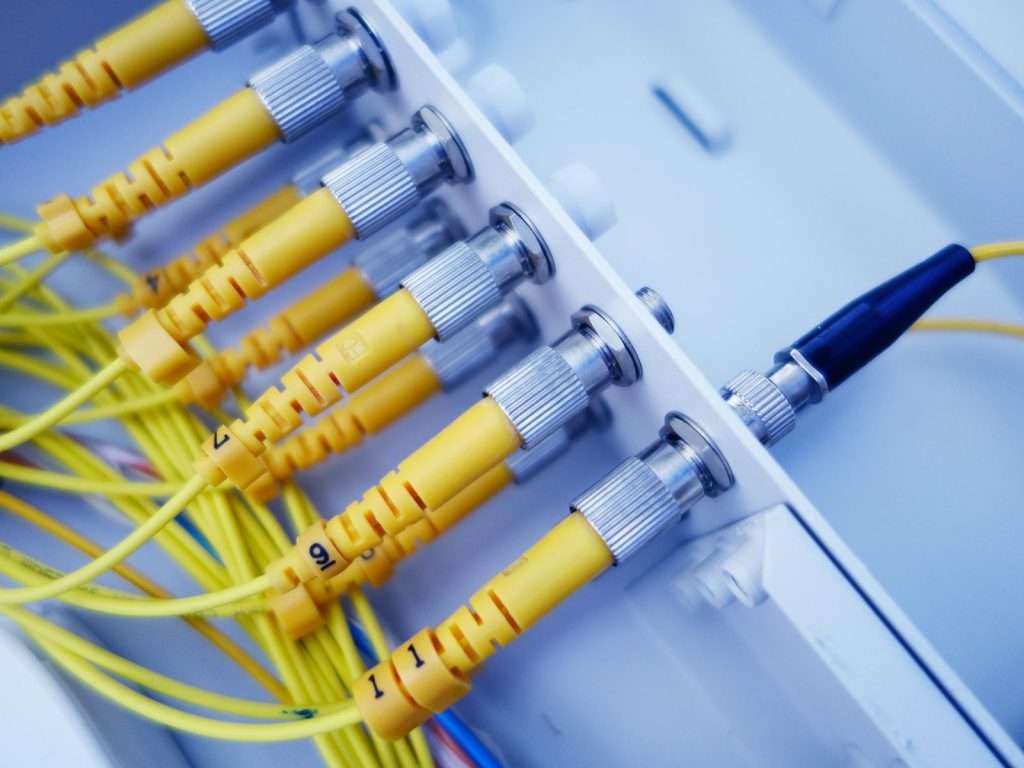
Ask almost anyone in technology what will decide the next few years of artificial intelligence and you will hear about chips, models, and enormous data centers. All of that matters. But this week, as I read through the latest industry coverage, I kept noticing a quieter theme that deserves more attention: the network that connects everything together is quickly becoming the real competitive advantage. As the chief technology officer of Cytranet, I find that encouraging, because it is exactly where our team has spent its time.
Industry commentators are saying out loud what carriers have understood for years. A powerful model sitting in a faraway facility does very little for a business if the connection to it is slow, congested, or unreliable. Trade publications this week were full of stories about fiber expansion, higher-capacity optical routes, and operators preparing their networks for heavier traffic. Reading them, it is hard not to feel optimistic. Money and attention are finally flowing toward the physical foundation that every cloud application, phone call, and video meeting rides on.
Why the Network Matters More Every Month
When I talk with customers, the conversation rarely starts with artificial intelligence. It starts with something practical: a clinic that wants its cloud records to open instantly, a school district that needs reliable voice and internet in every building, or a government office that cannot afford downtime. Yet the thread running through those conversations is the same. Applications are moving to the cloud, voice is moving to the cloud, and more of the software people use each day is quietly leaning on smart services that need steady, predictable connectivity.
That shift changes what a good internet connection looks like. Raw speed still counts, but it is only part of the picture. Consistent performance, symmetrical capacity for uploads as well as downloads, a backup path when a line is cut, and a team that answers the phone at three in the morning all count just as much. A business can have the cleverest software in the world and still have a bad day if the connection underneath it falters.
What We Are Seeing From Our Side
At Cytranet we design, deliver, and support fiber internet, fixed wireless, business VoIP and SIP trunking, managed Wi-Fi, managed IT, network security, colocation, and structured cabling for more than a thousand businesses, nonprofits, and government agencies. We are a nationwide carrier, we serve customers in all fifty states, and we operate from data centers in Las Vegas, Los Angeles, Phoenix, Dallas, and Chicago. Customers can order service through any of those locations, or from anywhere in the country.
Having that footprint matters more than it used to. Placing workloads and voice traffic close to the people who use them reduces delay, and having several facilities in different regions gives us more than one way to carry traffic when something unexpected happens. Our fiber circuits scale from entry-level speeds up to 40 gigabits per second, and for locations where fiber is not available yet, fixed wireless, microwave, and satellite can fill the gap or serve as a second path. That flexibility is what lets us size each connection around how an organization actually works instead of forcing every customer into the same package.
Voice Is Part of the Story Too
It is easy to forget that voice remains one of the most important applications on any business network. Cloud phone service has matured into something far more capable than the old desk phone, with more than one hundred features, call routing that follows people wherever they work, and easy integration with the tools teams already use. For organizations that still depend on aging copper lines, SIP trunking offers a straightforward way to modernize without replacing a phone system that still serves them well. Because voice is so sensitive to delay and interruption, it is also a very honest test of network quality. If calls sound clear, the network underneath is usually doing its job.
The Human Side of Infrastructure
One thing I have learned over the years is that infrastructure is ultimately about people. Our support team is based in the United States and answers by phone, text, and email around the clock, every day of the year. When a customer calls with a problem, they reach someone who knows their account and can start working on it immediately. In an industry that has been criticized for long hold times and finger pointing between providers, I am proud that a single point of contact for internet, voice, Wi-Fi, and managed services is something our customers tell us they value.
Looking Ahead
I am excited about where this is going. The renewed focus on fiber, on resilient routes, and on well-run facilities is good news for every organization that depends on connectivity, which at this point is every organization. Smaller providers and nationwide carriers alike have a chance to show what dependable service looks like when it is built around the customer rather than around a rate card.
For business and government leaders planning their technology for the coming year, my advice is simple. Before you evaluate the next big application, take a close look at the connection underneath it. Ask how much capacity you really have, what happens if a line is cut, who answers when something breaks, and whether your provider can grow with you. If those answers are solid, almost everything built on top will perform better. If you would like a second opinion on your own network, our team at Cytranet is always glad to talk it through, and you can reach us any time at 702-846-5000.
Talk to Cytranet
A business-only carrier for fiber internet, cloud voice, managed Wi-Fi, and managed IT. Start with a free technology evaluation.