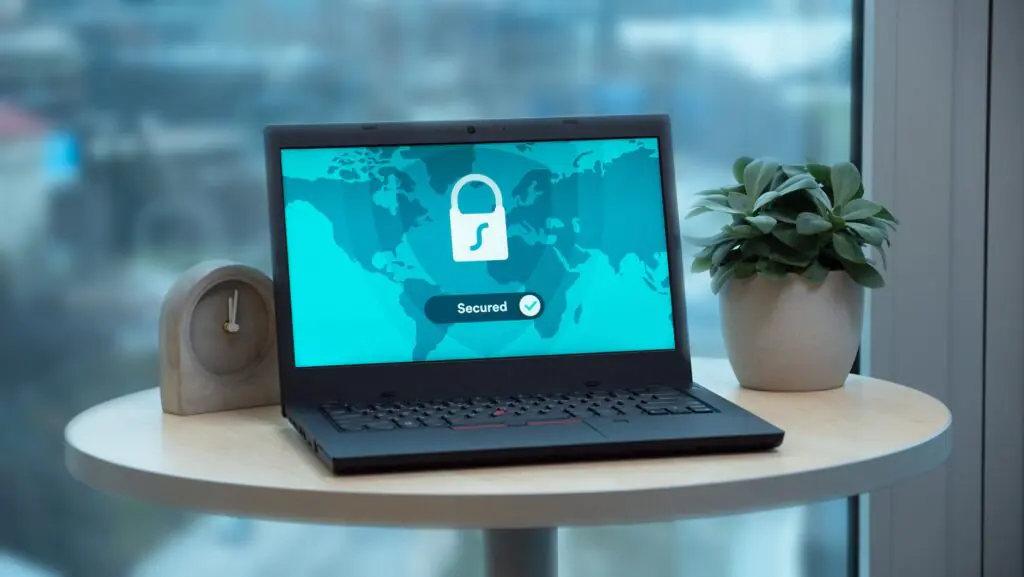


If you have ever needed to check a work email from a hotel business center, a client’s conference room, or a personal laptop at 9 p.m. because something couldn’t wait until morning, you have already used the idea behind web-based email access, even if you didn’t know it by that name. Web-based email access — widely known by the shorthand OWA — is the browser version of your hosted email and calendar platform. No install, no license key, no IT ticket to get set up on a new machine. You open a browser, sign in, and your inbox, calendar, contacts, and tasks are right there.
It sounds like a small convenience, and in a lot of ways it is. But for growing businesses, that convenience is doing more work than most people realize. Here’s a closer look at what OWA actually is, how to use it well, and where it fits — and doesn’t fit — into a modern business communication setup.
What Web-Based Email Access Actually Is
OWA is the browser-based client for a hosted email environment, delivered through a cloud productivity suite or a hosted mailbox environment rather than a desktop application installed on a company laptop. The branding around it has shifted over the years, and providers now often refer to it simply as “the web email client,” but plenty of IT teams and longtime users still call it OWA out of habit — both terms point to the same tool.
What used to be a stripped-down backup option, mainly used when someone’s desktop client crashed or a laptop was in for repair, has grown into a full-featured platform in its own right. Today’s version supports rich formatting, rules and filters, shared calendars, delegate access, add-ins, and most of the day-to-day features people rely on in a desktop email app. For a lot of employees, it is no longer a fallback. It is simply where they work.
Logging In and Getting Around
Getting into OWA doesn’t require any special setup on the user’s end. From any device with a modern browser, you go to your organization’s webmail sign-in page (or, for many organizations, straight through a productivity suite portal), enter your work email address and password, and your full mailbox loads in the browser window. If your organization hosts email through a managed provider rather than directly through the software vendor, the login process is typically identical from the user’s point of view — same familiar interface, same credentials, just a different server behind the scenes.
Once you’re in, the layout mirrors what most people already know from a desktop email client: a folder list on the left, your message list in the middle, and a reading pane on the right. Calendar, contacts, and to-do items sit in the app switcher, usually along the bottom-left corner of the screen. Search sits at the top and covers your full mailbox, not just what’s currently loaded on screen. A few features worth knowing about if you haven’t explored them:
- Offline access. Newer versions of the web email client can cache recent mail so you can keep reading and drafting even if your connection briefly drops.
- Focused inbox. Mail can be automatically sorted into a primary view and a secondary view, which helps cut through noise on a busy day.
- Shared and delegated mailboxes. If you have permission to a shared inbox or someone else’s calendar, you can switch into it directly from the browser without a separate login.
- Add-ins. Many of the same productivity and CRM add-ins available in a desktop email client also work inside the browser version.
Why Browser-Based Email Has Become the Default, Not the Backup
There’s a reason so many organizations have quietly shifted toward browser-based email as the primary way employees work, rather than treating it as an emergency option. A few advantages stand out.
It lowers IT overhead. Every additional desktop client is one more thing to install, configure, patch, and troubleshoot across a mix of operating systems and hardware. When email lives in the browser, IT teams spend far less time managing local software conflicts and far more time on work that actually moves the business forward.
It removes the “which device am I on” problem. A team member working from a client site, an airport gate, or a personal device during an emergency can open a browser, log in, and pick up exactly where they left off. No VPN client to configure, no software to install first, no waiting on IT to remote in and set something up.
It stays current automatically. Desktop software gets updated on a release schedule that can lag months behind. A cloud-hosted mail client updates in the background, so the security patches and feature improvements simply show up the next time someone refreshes their browser — no rollout project required.
It supports stronger, more centralized security. Because sessions run over HTTPS through modern authentication, IT administrators get much finer control over session timeouts, conditional access rules, and multi-factor authentication than they typically get with older sync protocols. That matters more than ever given how often business email is the entry point for phishing and credential-theft attempts.
Where Web-Based Email Runs Out of Road
Here’s the part that’s easy to miss: OWA is genuinely good at what it does, but what it does is email and calendaring. It was never built to be your entire communication stack, and treating it that way tends to create the exact kind of fragmentation it was supposed to eliminate.
In practice, that looks like a team checking email in the browser, then jumping to a separate app for phone calls, another one for internal chat, another for video meetings, and maybe a fourth for file sharing — each with its own login, its own notifications, and its own blind spots. Nothing in that list is connected to anything else. A customer’s call history doesn’t show up next to their email thread. A missed call doesn’t generate a task. Context gets lost every time someone switches tools, and for a growing team, that friction adds up fast.
How Cytranet Fits Into the Picture
This is where we come in. Cytranet provides hosted business email built on the same cloud email and productivity foundation that powers OWA, backed by 24/7/365 U.S.-based support and a 99.99% reliability standard across our cloud infrastructure. Your team keeps the interface they already know — nothing new to learn, no disruptive migration — while we handle the mailbox management, security configuration, backup, and uptime behind it.
But we also think the fragmentation problem above is worth solving properly rather than living with. That’s why Cytranet’s Unified Communications platform ties your hosted email together with voice calling, business messaging, video conferencing, and CRM integrations in a single system. Instead of a mailbox, a phone app, a chat tool, and a meeting app that don’t talk to each other, your team gets one connected environment: place a call directly from an email thread, see a customer’s full communication history — calls, messages, and email — in one place, and start a meeting without losing the context of the conversation that led to it.
Layered on top of that, our Managed IT Services team handles the day-to-day: proactive 24/7 monitoring, security patching, data backup and disaster recovery, and network protection, so your internal team isn’t stuck babysitting infrastructure instead of doing their actual jobs. Whether you’re a five-person office or a multi-location operation spread across the country, the goal is the same — technology that stays out of your way and just works.
Is It Time to Rethink Your Setup?
A few signs tend to show up when a business has outgrown a patchwork of disconnected communication tools:
- Email, phone calls, internal chat, and file sharing all live in separate systems with no shared history between them.
- Missed handoffs and duplicated context are becoming routine — a customer has to repeat themselves because the last conversation isn’t visible to whoever picks up next.
- New hires need logins and training across four or five different apps just to become fully operational.
- Your team is spending noticeable time each week just switching between tools rather than using any one of them well.
If that sounds familiar, it’s usually not a sign that any single tool is broken — it’s a sign the pieces were never designed to work as one system in the first place. OWA is an excellent foundation for business email, and a well-built unified communications platform is what turns that foundation into a genuinely connected way of working.
If you’d like a straightforward look at how your current email and communication setup compares to a fully connected alternative, Cytranet’s team is glad to walk through it — no pressure, just a clear picture of where your business stands and what your options look like.
Talk to Cytranet About Your Business Connectivity
Cytranet is a Las Vegas-based licensed telecommunications carrier providing dedicated fiber internet, fixed wireless, business VoIP and hosted PBX, managed Wi-Fi, colocation, and two-way radio solutions to businesses, nonprofits, and government organizations across Nevada, Arizona, California, and the broader Southwest. To discuss your needs with our team, call 702-846-5000 or email info@cytranet.com.