Something quietly encouraging happened in the connectivity world this week. Industry analysts published new research showing that low earth orbit satellite broadband is now making a measurable dent in the American digital divide, reaching households and communities that spent decades on the wrong side of the map. In the same week, a string of regional fiber builders announced fresh metro and long haul expansion projects from the mid Atlantic to the Southwest. For once, the story of American connectivity was not about who is being left behind. It was about how quickly the gaps are closing.
For Doug Roberts, Chief Technology Officer at Cytranet, the Las Vegas based provider of voice, data, cloud, and managed IT services, the news felt like a milestone worth pausing on.
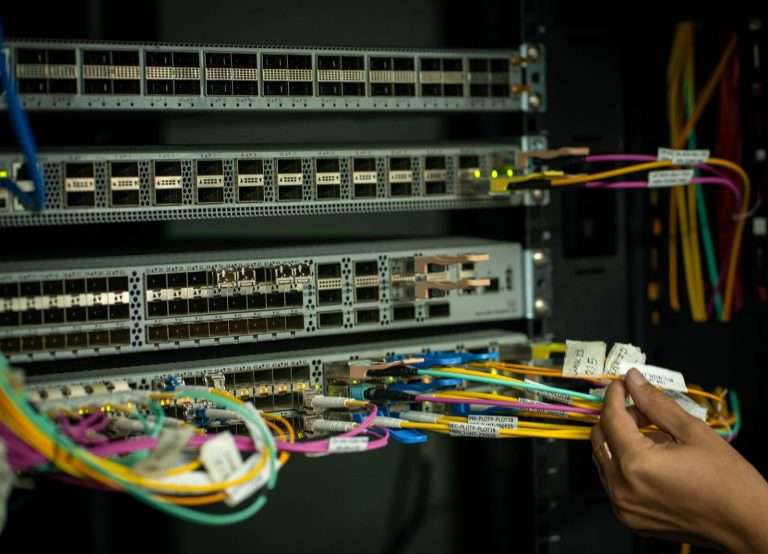
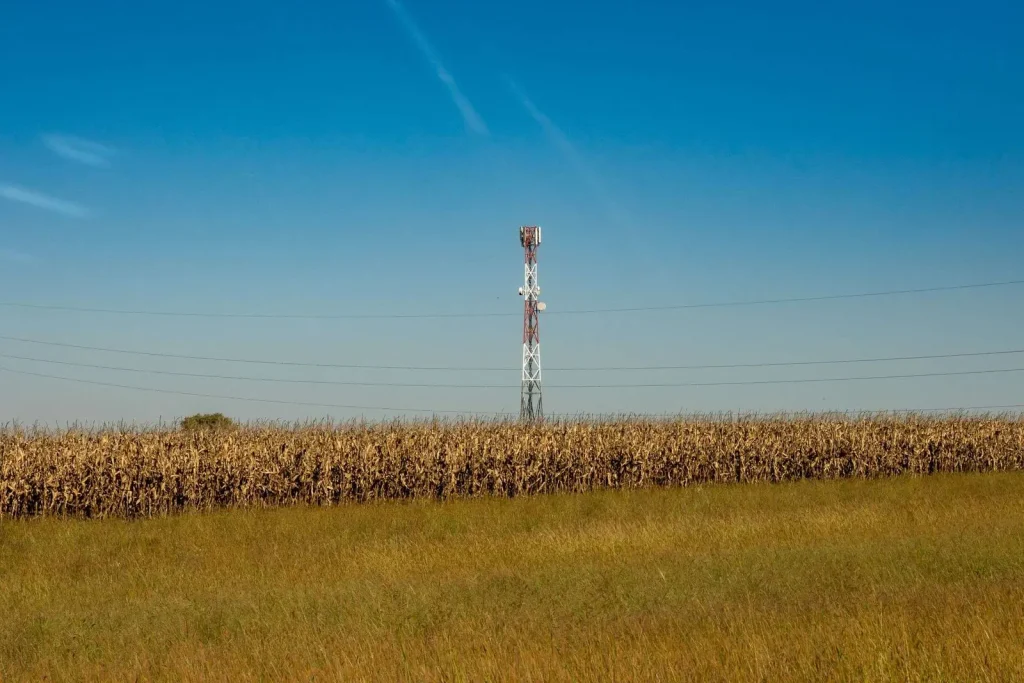
“I have been in this industry long enough to remember when the digital divide was treated as a permanent fact of life,” Roberts said. “You either had good infrastructure in your area or you did not, and if you did not, your options were dial tone and patience. What we are seeing now is different. Fiber keeps pushing further out, fixed wireless keeps getting better, and satellite has gone from a last resort to a legitimate connection. For the first time, almost every business in the country has more than one real path to the internet. That is a genuinely big deal.”
More Paths Than Ever Before
Roberts is quick to point out that the milestone is not just about geography. It is about resilience. When a business has access to multiple independent connection types, it can build a network that stays up even when one path fails.
“Ten years ago, redundancy was a luxury item,” he said. “If you were a hospital or a casino, you engineered around failure because you had to. Everyone else crossed their fingers. Today, we can design a network for a ten person office where the primary circuit is fiber, the backup rides a completely different technology, and the failover happens so fast the staff never notices. The economics finally work for ordinary businesses, not just the giants.”
That shift matters because expectations have changed just as fast as the technology. Phone systems, point of sale, security cameras, cloud applications, and even building safety systems now ride on the same connection. An outage that would have been an inconvenience in 2015 can stop a business cold in 2026.
“The internet connection used to be one of the utilities,” Roberts said. “Now it is the utility. When I talk to owners and IT directors, I tell them the question is no longer how fast is your connection. The question is what happens to your business in the sixty seconds after your connection drops. If you do not like the answer, that is a solvable problem now, and it is more affordable to solve than most people think.”
Good News for Small Towns and Small Businesses
The research that caught headlines this week focused on households, but Roberts believes the bigger long term impact will be on the businesses, nonprofits, and government agencies that anchor smaller communities.
“Every rural clinic, school district, tribal office, and family run manufacturer that gets a real connection changes what is possible in that community,” he said. “We support more than a thousand organizations, and some of the most rewarding projects are the ones where a customer in a market that was underserved five years ago suddenly has choices. They can run modern cloud voice. They can back up their data offsite. They can hire remote staff. Connectivity is not the finish line, it is the starting line, and a lot more people are getting to it.”
Cytranet has built its business around that idea of meeting customers wherever they are. The company provides business internet, cloud voice, unified communications, managed IT services, network security, data backup and recovery, and carrier services to organizations across all fifty states, backed by a support team that answers the phone around the clock every day of the year.
“Our job is to be the one call,” Roberts said. “A customer should not have to become a telecom expert to get a reliable network. They tell us what the business needs to do, and we put together the right mix of connections and services to make it happen. Some of that is fiber, some of it is wireless, some of it is satellite in the right situation. The technology mix matters a lot less to the customer than the outcome, which is that everything simply works.”
The Next Chapter
Asked what he expects over the next few years, Roberts pointed to the same forces behind this week’s headlines: continued fiber construction, smarter network automation, and healthy competition among connection technologies that keeps quality rising and prices honest.
“Competition between fiber, wireless, and satellite is the best thing that has happened to business connectivity in a generation,” he said. “Every one of those technologies is pushing the others to be better. The winners are the businesses and the communities that finally get served properly.”
He also sees a cultural shift inside the industry that he welcomes.
“The conversation has moved from coverage maps to outcomes,” Roberts said. “Nobody brags about theoretical speeds anymore. The pride now is in uptime, in support that picks up the phone, in networks that quietly do their job every single day. That is the standard we hold ourselves to at Cytranet, and honestly, it is the standard the whole industry is being held to now. That is good for everyone.”
After a week when the news cycle offered plenty to worry about, the connectivity story stands out as a bright spot. The divide that once looked permanent is narrowing, the tools to build resilient networks are within reach of businesses of every size, and the people doing the work, like Roberts and his team, sound more optimistic than they have in years.
Talk to Cytranet About Your Business Connectivity
Cytranet is a Las Vegas-based licensed telecommunications carrier providing dedicated fiber internet, fixed wireless, business VoIP and hosted PBX, managed Wi-Fi, colocation, and two-way radio solutions to businesses, nonprofits, and government organizations across Nevada, Arizona, California, and the broader Southwest. To discuss your needs with our team, call 702-846-5000 or email info@cytranet.com.
Talk to Cytranet
A business-only carrier for fiber internet, cloud voice, managed Wi-Fi, and managed IT. Start with a free technology evaluation.