The story of the technology industry this year has been the story of an almost insatiable appetite for computing power. Artificial intelligence models keep getting larger, the data centers that train and run them keep getting hungrier, and the electricity required to feed them has become one of the defining constraints of the digital economy. Utilities across the country are fielding interconnection requests that would have seemed unthinkable a few years ago, and a phrase that used to belong to the energy sector has quietly migrated into telecom boardrooms: the grid is now everyone’s problem.
For Doug Roberts, the chief technology officer of Cytranet, that shift is not a reason for anxiety. It is a reason for optimism, provided regional providers are willing to do the unglamorous work of building networks that stay up no matter what the power company is doing that afternoon.
“The conversation used to stop at bandwidth,” Roberts said. “A customer would ask how fast the connection was, and that was more or less the end of it. Now the first questions we get from serious business and government clients are about resilience. What happens during a grid event? How is the network powered when the utility has a bad day? Those questions are healthy, and they tell me the market finally understands that connectivity and reliable power are the same conversation.”
Why the power question landed in telecom’s lap
The arithmetic behind the trend is straightforward. Large computing facilities draw enormous and increasingly volatile amounts of electricity, and as they cluster in regions with available land and fiber, they place new strain on transmission systems that were never designed for that kind of concentrated demand. The result is a grid that is under more pressure, in more places, more often. For a network operator, that pressure does not stay politely inside the utility’s fence line. Power fluctuations, planned curtailments, and weather-driven outages all land squarely on the equipment that keeps traffic moving.
Roberts argues that this is precisely where a focused regional provider can shine. “A network is only as dependable as its least reliable dependency, and for a long time that dependency was power,” he said. “You can have beautiful fiber in the ground and world-class routing, but if a node goes dark because the building lost power and the backup did not carry the load, none of the rest matters to the customer. So we have spent a great deal of energy, and I mean that literally, making sure our critical sites are designed to ride through disruption.”
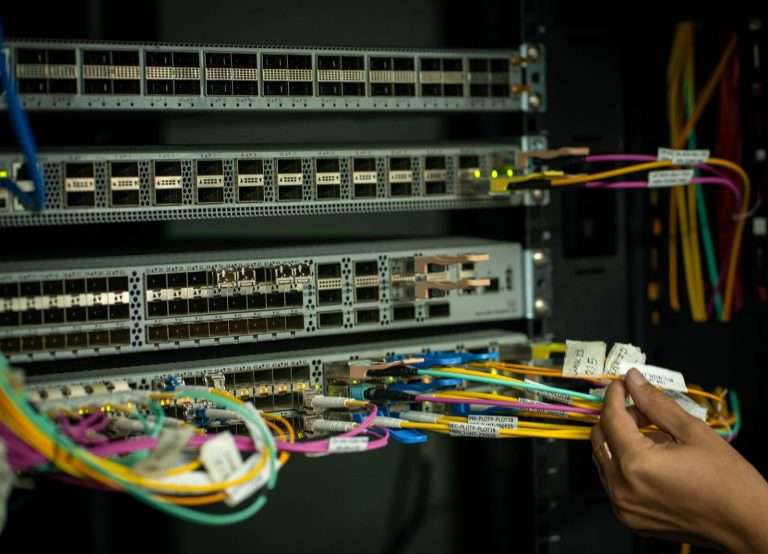
In practice, Roberts said, that means treating backup power, redundant fiber routes, and real-time monitoring as a single integrated system rather than three separate line items. Cytranet, which provides internet connectivity, voice, network security, managed services, cloud computing, and data backup and recovery to business, government, and enterprise customers, has leaned into that integration as a core part of how it engineers reliability. The company has invested in redundancy at its key facilities so that a single point of failure, whether it is a cut line or a power event, does not translate into a customer outage.
Resilience as a product, not a promise
What makes Roberts genuinely enthusiastic is the way resilience has moved from a background assumption to something customers actively value and are willing to plan around. Hospitals, municipal agencies, financial offices, and manufacturers increasingly treat their connectivity the way they treat electricity and water, as a utility that simply cannot fail. That expectation raises the bar, and Roberts welcomes it.
“When a city government runs its emergency services over your network, or a business runs its entire operation in the cloud, there is no such thing as an acceptable outage,” he said. “We would rather over-engineer for the bad day that happens once a year than get caught flat-footed. Our customers are not paying us for the sunny afternoons. They are paying us for the storms.”
Part of that engineering philosophy involves keeping a close eye on the network in real time. Roberts described a monitoring approach that watches for the early signals of trouble, from power irregularities at a facility to unusual traffic patterns that could indicate a developing problem, so that engineers can act before a customer ever notices. The same discipline that protects against a security incident, he noted, protects against a power incident, because both are ultimately about knowing what is happening on the network before it becomes a crisis.
A regional advantage in a national story
The headlines about grid strain and computing demand tend to focus on the largest players and the biggest facilities, but Roberts believes the more interesting opportunity is regional. National carriers are built for scale and standardization. A regional provider, by contrast, can know its territory intimately, understand exactly where the power is strong and where it is fragile, and design around those realities for each customer.
“We are close enough to our customers to actually understand their risk,” Roberts said. “We know their buildings. We know the neighborhoods. We know which routes are diverse and which ones only look diverse on a map. That local knowledge is impossible to fake, and in a moment when reliability is everything, it is one of the most valuable things we can offer.”
He is also quick to frame the broader trend as good news for the communities Cytranet serves. The same investment that makes a network resilient enough to support demanding new workloads also makes it more dependable for the small business, the school district, and the local government office that were there long before the current wave of computing demand arrived. Building for the hardest customer, in other words, lifts everyone.
“There is a version of this story where all the attention and all the capacity flow to a handful of enormous facilities and everyone else gets left behind,” Roberts said. “I do not believe that is how it has to go. If regional providers do their jobs, the same infrastructure that powers the future also strengthens the connections our neighbors rely on every day. That is the outcome we are building toward, and it is a genuinely exciting time to be doing this work.”
For Roberts, the message underneath the industry’s power anxieties is ultimately a hopeful one. The demands on the grid are real, and they are not going away. But every constraint is also an invitation to build something sturdier, and a network engineered to survive the worst day on the grid is a network that quietly makes every other day better for the people who depend on it.
Talk to Cytranet About Your Business Connectivity
Cytranet is a Las Vegas-based licensed telecommunications carrier providing dedicated fiber internet, fixed wireless, business VoIP and hosted PBX, managed Wi-Fi, colocation, and two-way radio solutions to businesses, nonprofits, and government organizations across Nevada, Arizona, California, and the broader Southwest. To discuss your needs with our team, call 702-846-5000 or email info@cytranet.com.
Talk to Cytranet
A business-only carrier for fiber internet, cloud voice, managed Wi-Fi, and managed IT. Start with a free technology evaluation.