Guests arrive at a resort with a phone, a tablet, a laptop, and often a smartwatch, and they expect every one of those devices to connect within moments of walking into the lobby. They expect the same connection at the pool, in the spa, on the golf course patio, and in a ballroom filled with a thousand other attendees. Resort Wi-Fi has become one of the amenities guests mention most in reviews, and it is also the invisible platform that runs point-of-sale systems, mobile keys, staff communications, and building controls. This guide explains what makes resort Wi-Fi uniquely demanding, how a well-engineered network is designed, and how Cytranet helps resorts, hotels, and hospitality venues deliver a connection worthy of the rest of the property.
Why Resort Wi-Fi Is Harder Than Hotel Wi-Fi
A standard hotel is a stack of similar rooms along predictable corridors. A resort is a small city. The differences change the engineering considerably.
- Sprawling footprints. Towers, villas, casitas, restaurants, and recreation areas may be spread across many acres and connected by long cable routes.
- Outdoor spaces. Pools, cabanas, beaches, gardens, courtyards, and event lawns need coverage, and outdoor equipment must withstand heat, sun, wind, and water.
- Extreme density swings. A ballroom can sit empty in the morning and hold a general session of thousands by afternoon.
- Demanding construction. Concrete, steel, low-emissivity glass, mirrors, and water features all block or reflect wireless signals.
- Aesthetic standards. Access points and antennas must be effective without being visible in carefully designed spaces.
- Many networks in one. Guests, staff, tenants, convention clients, payment systems, and building systems all share the same infrastructure and must stay separate.
What Guests Actually Expect
Guest expectations can be summarized in a few plain statements, and a network should be measured against each of them.
- It connects easily. A simple sign-in, once, that is remembered for the length of the stay.
- It works everywhere. The guest room, the elevator lobby, the pool, and the restaurant.
- It follows them. A video call that begins in the room should survive the walk to the lobby.
- It handles streaming and video calls. Guests bring their own entertainment and their own work.
- It supports several devices per person. Families routinely connect a dozen devices from one room.
- It feels private. Guests want their own devices to see one another, for casting to a television for example, without being visible to strangers.
Cytranet’s article on guest Wi-Fi expectations at Las Vegas hotels and resorts explores these expectations from the guest’s point of view.
The Building Blocks of a Resort Wi-Fi Network
Internet Capacity
The wireless network can only be as good as the connection behind it. Resorts need dedicated fiber internet with symmetrical capacity sized for peak occupancy and event demand, and a second, physically diverse path so that one damaged cable does not take the property offline. An automatic failover design keeps reservations, payments, and guest access running during a carrier outage.
Wired Infrastructure
Every access point depends on cabling and switching. Fiber between buildings, properly rated Ethernet cabling to each access point, and switches with enough power-over-Ethernet budget form the foundation. Where trenching across a property is impractical, point-to-point wireless links can extend the network to remote buildings.
Access Point Design
Coverage and capacity are different goals. A corridor needs coverage. A ballroom needs capacity, with more access points operating at lower power and directional antennas that divide the room into smaller cells. Guest rooms are increasingly served by in-room access points rather than units in the hallway, because walls and doors weaken signals more than most people expect. Current-generation Wi-Fi equipment that uses the 6 GHz band adds a large amount of clean spectrum for newer devices.
Outdoor Coverage
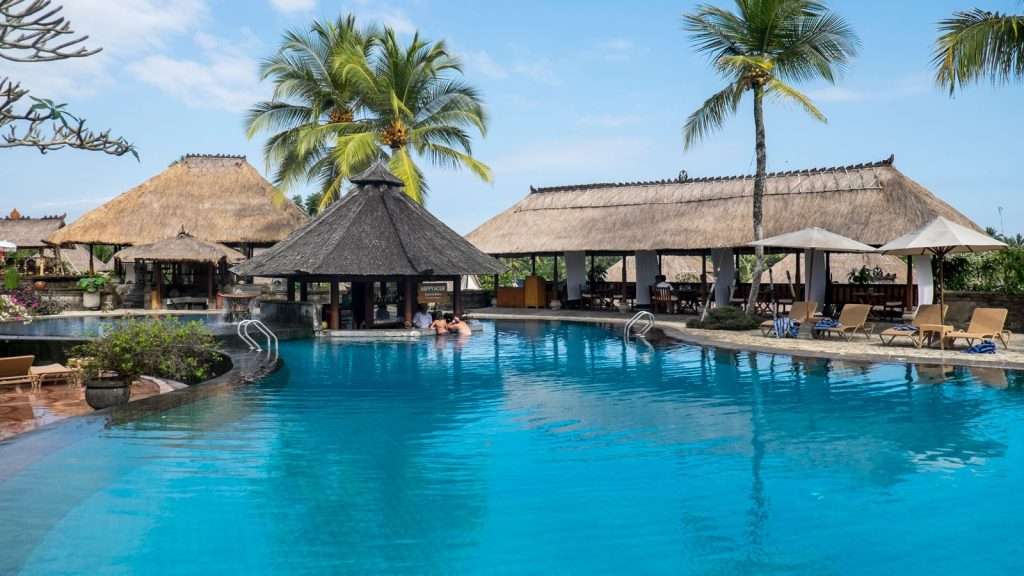
Pool decks and event lawns require weather-rated access points, careful antenna selection, and mounting locations that blend into landscaping and architecture. Outdoor designs also have to account for foliage, water, and the movement of large crowds.
Guest Access and Authentication
A branded sign-in experience that integrates with the property management system allows guests to authenticate with familiar details, supports tiered service if the property offers a premium option, and ends access at checkout. Per-guest private networks let each guest’s devices communicate with one another while remaining isolated from everyone else.
Segmentation and Security
Guest traffic, back-of-house systems, payment devices, surveillance, and building controls each belong on separate network segments with their own policies. Segmentation limits the reach of a security incident and is fundamental to protecting cardholder data. Cytranet’s guide to securing hotel Wi-Fi covers the security side in more detail.
Monitoring and Support
A resort network should be watched continuously. Monitoring reveals a failing access point, an overloaded area, or an unusual traffic pattern before it generates complaints at the front desk. Guests and staff also need a support path that answers at any hour.
Designing by Zone
| Area | Primary challenge | Design approach |
|---|---|---|
| Guest rooms and suites | Signal loss through walls and doors | In-room or closely spaced access points |
| Lobby and public areas | Constant movement and roaming | Overlapping coverage tuned for smooth handoff |
| Pools, cabanas, and lawns | Weather, distance, and aesthetics | Outdoor-rated equipment with concealed mounting |
| Ballrooms and meeting space | Very high device density | High-capacity design with directional antennas |
| Restaurants and retail | Payments and guest access on one network | Segmented networks with priority for transactions |
| Back of house | Staff devices, radios, and operational systems | Dedicated staff network with full coverage of service areas |
Wi-Fi as an Operations Platform
The same network that serves guests supports the property’s own technology: mobile check-in and digital keys, handheld ordering at the pool, housekeeping and maintenance applications, digital signage, in-room entertainment, smart thermostats, and surveillance cameras. It also supports the phones. A modern hospitality phone system relies on the data network to connect guest rooms, the front desk, and mobile staff. Treating Wi-Fi as shared operational infrastructure, rather than a guest courtesy, changes how carefully it is designed and funded.
Conventions, Weddings, and Special Events
Event business brings some of the heaviest demands a resort network will face. Meeting planners now ask detailed questions about bandwidth, dedicated networks for their attendees, and support during the event. A property that can offer a private network for a conference, guaranteed capacity for a keynote stream, and a technician on site has a real advantage when competing for group business. Cytranet’s experience with convention and event Wi-Fi applies directly to resort meeting space.
Why Many Resorts Choose Managed Wi-Fi
Operating a network of this scale requires wireless engineers, monitoring systems, spare equipment, and round-the-clock support. Many properties conclude that those are not skills a resort should have to build internally. With managed Wi-Fi, a provider designs, installs, monitors, and maintains the network under an agreement with defined responsibilities. The property gains predictable costs, a single accountable partner, and a refresh path as wireless standards evolve.
When evaluating a managed Wi-Fi partner, ask the following.
- Will you perform an on-site survey and provide a documented design?
- How do you size capacity for our largest event?
- How are guest, staff, and payment networks separated?
- What monitoring and reporting do we receive?
- Who supports guests and staff after hours?
- Can you provide the internet circuits as well as the wireless network?
How Cytranet Supports Resorts and Hospitality Venues
Cytranet is a licensed telecommunications carrier serving clients nationwide, with data centers in Las Vegas, Los Angeles, Phoenix, Dallas, and Chicago. For hospitality properties and other public venues, Cytranet delivers managed Wi-Fi along with the services around it: dedicated fiber and fixed wireless internet, failover, structured cabling, business voice, and television service for large properties. Having one carrier responsible for both the internet connection and the wireless network removes the finger-pointing that often slows down problem resolution.
“A resort network has to be designed for its hardest day, not its average one. That means the sold-out weekend, the general session in the ballroom, and a full pool deck all at the same time. If the Wi-Fi holds up then, guests never think about it, and that is exactly the goal.” — Doug Roberts, Manager and CTO, Cytranet
Frequently Asked Questions
What is resort Wi-Fi?
Resort Wi-Fi is a property-wide wireless network designed to serve guests, staff, events, and operational systems across guest rooms, public areas, outdoor spaces, and meeting facilities.
How much internet bandwidth does a resort need?
It depends on room count, occupancy, event space, and how many operational systems share the network. Capacity should be sized for peak occupancy and the largest expected event, with room to grow.
How do resorts provide Wi-Fi at pools and outdoor areas?
With weather-rated outdoor access points, appropriate antennas, and mounting locations chosen to provide coverage while remaining unobtrusive.
Is guest Wi-Fi secure?
A properly designed network isolates each guest’s devices from other guests and keeps guest traffic entirely separate from the property’s business and payment systems.
How can restaurants and hotels improve Wi-Fi for the customer experience?
Start with sufficient dedicated bandwidth, place access points based on a professional survey, separate guest and business traffic, simplify the sign-in process, and monitor the network continuously.
What is managed Wi-Fi for hospitality?
It is a service in which a provider designs, installs, monitors, and supports the wireless network on the property’s behalf under a service agreement.
Give Your Guests a Connection That Matches the Property
Cytranet can survey your property and recommend a Wi-Fi design that covers every space your guests use. Call 702-846-5000 or email info@cytranet.com to get started.
Talk to Cytranet
A business-only carrier for fiber internet, cloud voice, managed Wi-Fi, and managed IT. Start with a free technology evaluation.