
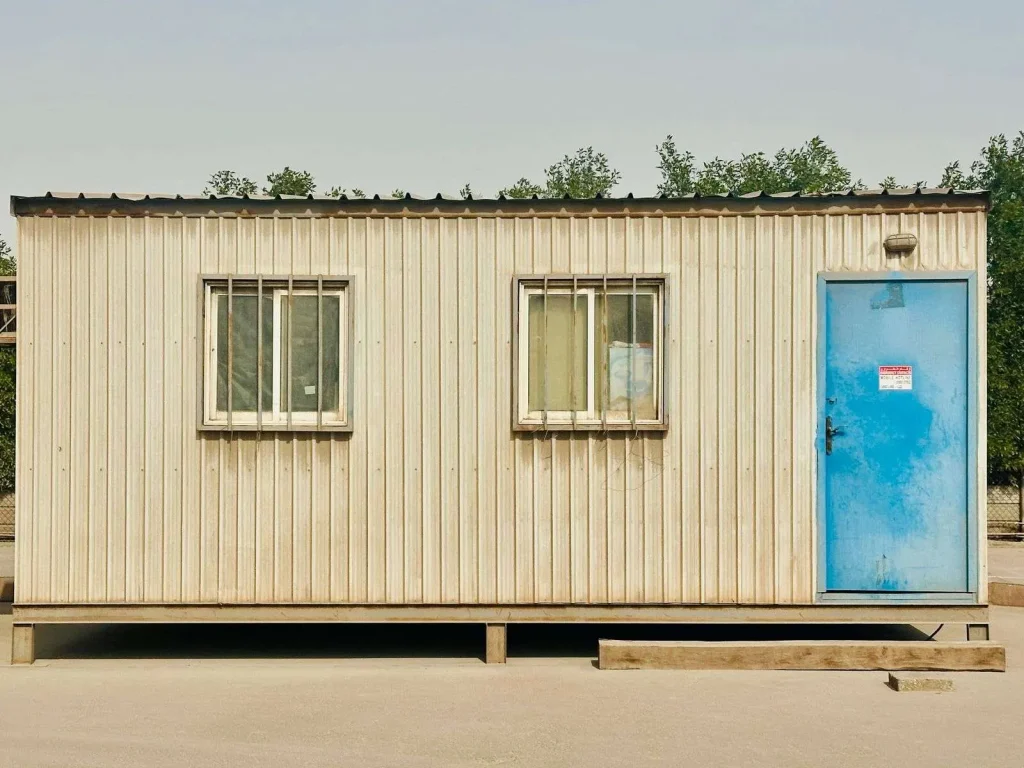
The first morning on a new job site usually looks the same everywhere. A graded pad, a couple of portable toilets, a conex box full of tools, and a job trailer that was dropped off the afternoon before. Somebody from the general contractor walks in with a laptop, opens it, and discovers that the trailer is exactly as connected as the dirt around it.
That moment has become a lot more expensive than it used to be. Plans live in the cloud and daily reports get filed from tablets. When the trailer has no reliable connection, work does not stop, but it slows down in a hundred small ways.
Doug Roberts, chief technology officer of Cytranet, the Las Vegas-based business-only carrier, has spent a lot of time thinking about how to close that gap. “A job trailer is a real office with a short lease,” he said. “The people inside it need the same things any office needs, they just need it set up fast, moved later, and torn down cleanly when the project wraps.”
Why temporary sites are different
A permanent building gets connectivity planned months in advance. Conduit is laid, a carrier brings in fiber, and cabling is pulled while the walls are open. A construction project rarely has that luxury. The site may be raw land at the edge of town, the trailer may move twice as the building footprint changes, and the whole setup might only need to exist for nine months or two years.
Trenching fiber to a temporary trailer is usually impractical, and waiting weeks for a wired circuit defeats the purpose. That is why most temporary deployments lean on wireless technologies that can be stood up quickly and reused on the next project.
Fixed wireless as the workhorse
Where a site has line of sight to a tower or rooftop, fixed wireless internet is often the first choice. A small radio mounted on a mast or the trailer roof links to a nearby point on the provider’s network, delivering low-latency service that handles video calls, large drawing sets and cloud project management tools without much fuss.
“Fixed wireless is the tool we reach for when we can see a path,” Roberts said. “It installs in a day, it performs like a business line, and when the project moves, the radio comes down and goes up again somewhere else. That flexibility is exactly what a builder wants.”
Line of sight is the main constraint. A site survey confirms whether there is a clear path, and it also looks at where cranes, stockpiles and the rising structure itself might block the signal later. Mast height and mounting location get planned with the build schedule in mind, not just the first week.
Satellite for the truly remote
Some projects sit far from any tower: solar fields, pipeline work, highway improvements across open desert, or rural facilities in the far corners of Nevada and California. For those, low-earth-orbit satellite service has changed the equation. Modern satellite terminals offer much lower latency than older geostationary service, which makes voice and video usable in places that once had nothing.
Cytranet provides satellite internet installation for business locations, including temporary ones. The details that matter on a job site are mounting, cable routing, power and making sure the terminal has a clear view of the sky that will not be blocked as the project grows.
Bonding connections for resilience
The most dependable temporary setups rarely rely on a single link. Bonding or failover equipment can combine a fixed wireless connection with satellite or cellular service, either aggregating capacity or switching automatically when one path drops. For a site that runs payroll, safety reporting and camera feeds through the trailer, that redundancy is cheap insurance.
“Every connection has a bad day eventually,” Roberts said. “A dust storm, a truck that backs into a mast, a cellular sector that gets congested at shift change. When you put two different technologies side by side, the odds that both have a bad day at the same time get very small.”
What goes inside the trailer
Connectivity is only the first piece. Once the link is live, a well-run site usually adds:
- A managed router and firewall so the trailer network is not an open door to project files.
- Wi-Fi coverage that reaches the trailer, the laydown yard and sometimes the building itself as floors go up.
- Cloud-based business phone service so the site number rings on desk phones and mobile devices alike, and follows the team to the next project.
- Camera connectivity for site security and progress documentation.
- Two-way radios for crews working where phones are impractical.
Keeping all of it with one support partner means one number to call when something stops working. Cytranet offers 24/7 support, which matters when a pour starts at four in the morning.
Planning for the whole project lifecycle
Roberts encourages builders to think about connectivity in phases rather than as a single install. Mobilization needs something fast. The middle of the project may need more capacity as trades multiply and cameras are added. Closeout often overlaps with the permanent building’s own service coming online, and the temporary gear has to come out without leaving loose ends.
“The best conversations we have with contractors start before the trailer is even ordered,” he said. “If we know the schedule, we can have the survey done, the equipment staged and the phone numbers ready, so day one is a working day instead of a waiting day.”
Cytranet’s broader look at construction IT pain points covers some of the longer-term challenges builders face.
A practical checklist for the next site
Before the next mobilization, it helps to answer a few questions early. Is there a likely line of sight to a nearby tower? How many people and devices will the trailer support at peak? Will there be cameras or other equipment that need bandwidth around the clock? Does the site phone number need to stay the same from project to project? And who will be the single point of contact when something breaks on a weekend?
With those answers in hand, a good carrier can recommend the right mix of fixed wireless, satellite and backup service, and get it installed on the schedule the project actually runs on.
“Construction moves fast, and it does not wait for IT,” Roberts said. “Our job is to make the trailer feel like part of the company network from the first day, so the team can focus on building.”
Talk to Cytranet
A business-only carrier for fiber internet, cloud voice, managed Wi-Fi, and managed IT. Start with a free technology evaluation.