
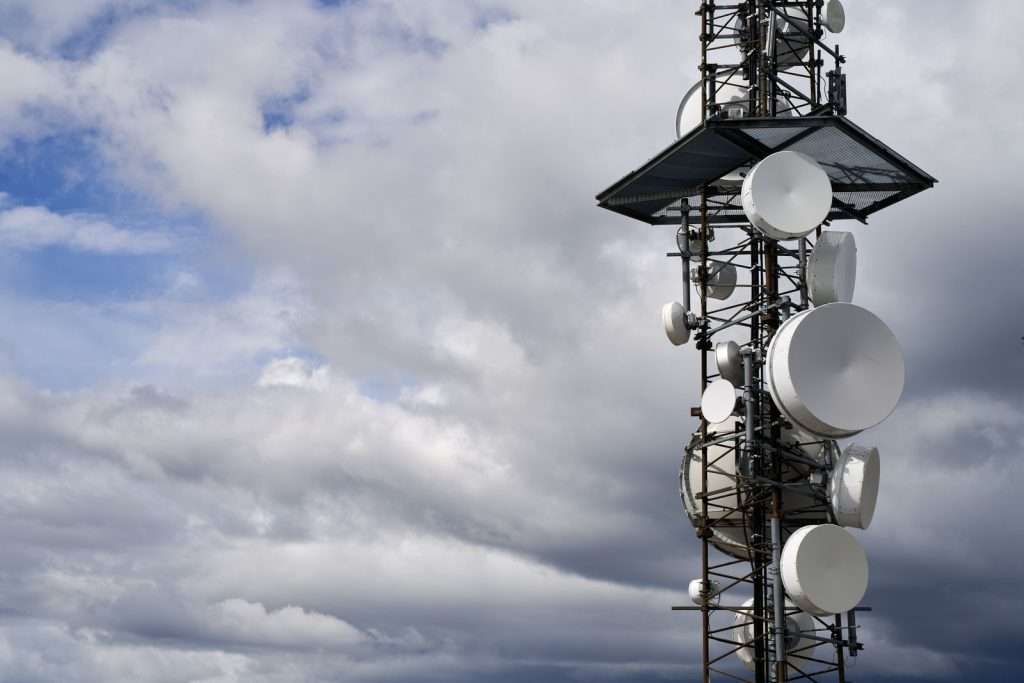
Anyone who follows the telecom industry knows that fiber is the gold standard for business internet. It is fast, it is symmetrical, and it will carry whatever demands we place on it for decades. But this week, a question has been making the rounds in industry coverage: can wireless deliver something close to fiber service, without the fiber? According to Cytranet Chief Technology Officer Doug Roberts, the honest answer is a very encouraging “increasingly, yes, in the right places,” and he believes that is good news for business owners everywhere.
“For years, fixed wireless was treated as the consolation prize you accepted when the fiber crews could not reach your street,” Roberts said. “That has changed. The radios are better, the equipment is more affordable, and the engineering behind it is far more mature. We now design wireless paths as a first-class part of a network, not as an afterthought.”
Why the economics are shifting in businesses’ favor
Roberts points to a simple truth about network building. The most expensive part of any connection is usually the last stretch, the trenching, permitting, and construction needed to physically reach a building. Wireless spends radio spectrum and equipment in place of construction, which can shorten timelines dramatically. Recent industry analysis has noted that newer, lower-cost wireless devices are pushing the price of serving each location down, and that makes fixed wireless a realistic option for more addresses than ever before.
“When a business tells us it needs service next month and the nearest fiber is a long way off, a well-designed wireless link can be the difference between waiting and working,” Roberts said. “Many of the locations we hear from are in places where a build would take a long time or cost more than the business can reasonably justify. Wireless gives those organizations a serious path forward.”
Fiber and wireless work best as partners
It would be easy to frame this as a contest, but Roberts is quick to say that is the wrong way to look at it. In his view, the strongest business networks use each technology for what it does best. Dedicated fiber remains the right answer for the heaviest workloads, and Cytranet delivers it at speeds from 1.5 Mbps all the way up to 40 Gbps. Fixed wireless and microwave links shine where fiber is not yet available, where a project needs to move quickly, or where a second, independent path is needed for resilience.
That last point matters more than many people realize. A single cut cable can take an entire office offline, no matter how fast that cable is. Pairing a primary fiber circuit with a separate wireless backup means the business stays connected even when a construction crew digs in the wrong place. “Redundancy is one of those things nobody thinks about until the day they need it,” Roberts said. “A backup path that arrives by a completely different route is some of the best insurance a business can buy.”
What this means for the people we serve
Cytranet is a business-only carrier, and its customers include businesses, nonprofits, and government agencies of every size. For many of them, especially remote sites, rural offices, construction trailers, temporary locations, and branch buildings, the improving state of wireless technology opens doors that were closed only a few years ago. A county office on the edge of town, a retail location in a growing area, or a field site with no fiber nearby can now be connected with confidence, and Cytranet also installs satellite service for the most remote locations.
Roberts also sees a benefit for organizations that already have fiber. Voice, video, and cloud applications are the lifeblood of modern work, and a dropped connection interrupts all three at once. Adding a wireless failover path, paired with cloud voice that includes built-in failover call routing, helps keep phones ringing and customers served when the unexpected happens.
Looking ahead with optimism
The broader industry mood reflects the same momentum. Telecom spending has been climbing worldwide, new fiber routes are lighting up, and providers are investing in networks that can carry the next wave of demand. Roberts finds it all encouraging. “More capacity, more options, and more competition in how connectivity gets delivered are all good for the customer,” he said. “Our job is to take that expanding toolbox and turn it into a service that is simple to buy and dependable to use.”
He added that the process should feel straightforward for the customer. Cytranet begins with a free technology evaluation, surveys the site, designs the right mix of fiber, wireless, and voice in a single proposal, and then handles installation and number porting directly. After the service goes live, it is monitored and supported around the clock by a U.S.-based team that answers by phone, text, and email at any hour.
“The goal has never been to push one technology,” Roberts said. “The goal is to look at what an organization actually needs, whether that is the raw speed of fiber, the quick turnaround of wireless, or both working together, and then build it properly. That is what business customers deserve, and it is a great time to be doing it.”
Organizations curious about how fixed wireless, microwave, satellite, and dedicated fiber could fit their own locations are welcome to request a free technology evaluation from Cytranet, or to call 702-846-5000 to speak with the team.
Talk to Cytranet
A business-only carrier for fiber internet, cloud voice, managed Wi-Fi, and managed IT. Start with a free technology evaluation.