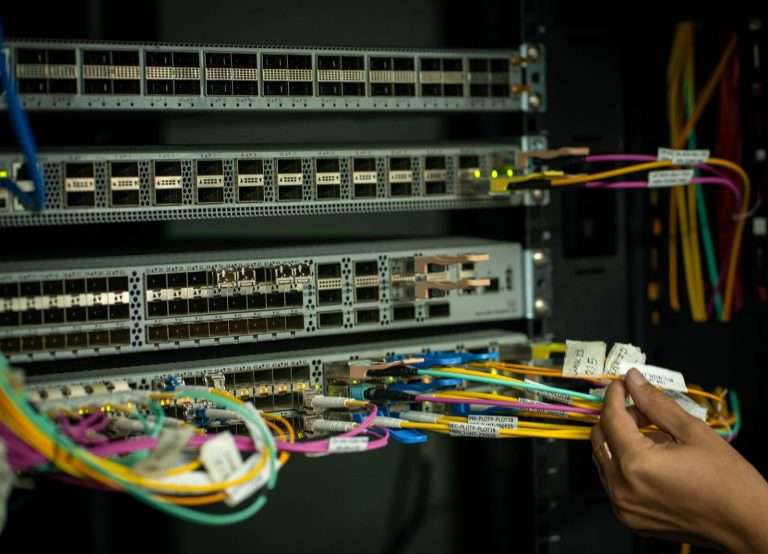
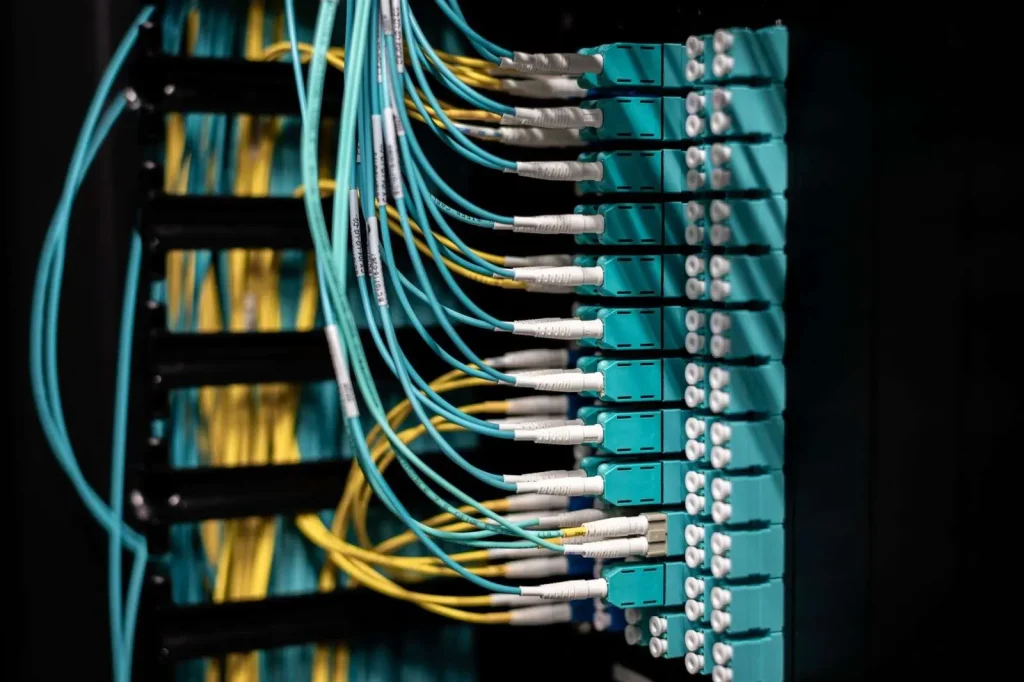
When a company moves into a new office or refreshes its wireless network, the conversation usually centers on the visible pieces: sleek access points on the ceiling, new switches, faster internet. The cable running above the ceiling tiles rarely makes the agenda. Yet it quietly determines how much of that new equipment’s potential the business will actually get.
Doug Roberts, chief technology officer of Cytranet, calls cabling the part of the network that everyone depends on and almost nobody thinks about. “You can buy the newest access points on the market, but they connect to the network through a cable,” he said. “If that cable is old, damaged or installed poorly, it becomes the ceiling on everything above it.”
Why new Wi-Fi puts pressure on the wiring
Each new generation of Wi-Fi has raised the amount of data an access point can move. Modern access points can exceed the capacity of a traditional one-gigabit wired connection under heavy load, which is why many now support multi-gigabit uplinks. Older cable categories may not handle those speeds reliably over longer runs.
Power is the other factor. Most enterprise access points receive electricity over the same ethernet cable that carries their data, a technique called power over ethernet. Newer models often draw more power than their predecessors. Cable quality, run length and bundling all affect how well that power is delivered and how much heat builds up in tightly packed bundles.
“People are surprised when a brand-new access point underperforms,” Roberts said. “Very often the answer is in the ceiling. The cable was fine for the equipment from ten years ago, but it was never meant for what we are asking it to do now.”
The build-out is the best moment to get it right
Office build-outs and renovations offer a window that closes quickly. Walls are open, ceilings are accessible, and contractors are already on site. Adding or replacing cable at this stage costs far less and causes far less disruption than trying to do it after furniture is installed and employees have moved in.
Roberts encourages businesses to involve their network partner before construction drawings are final. “When cabling is an afterthought, it gets squeezed,” he said. “Pathways are undersized, the telecom room ends up in a closet with no ventilation, and drops are placed where the furniture plan used to be rather than where people actually sit. Bringing us in early avoids all of that.”
What good structured cabling includes
Structured cabling is an organized, standards-based approach rather than a collection of individual wires. A well-designed system typically includes:
- A cable category chosen for the speeds and power levels the business expects over the next decade, not just today
- Fiber backbone connections between telecom rooms and floors
- Access point locations planned from a wireless design, with extra drops for future density
- Proper pathways, support and separation from electrical sources
- Consistent labeling, testing and documentation of every run
Testing and documentation are easy to skip and expensive to lack. Certified testing confirms each run performs as expected before anything is plugged in. A clear record of what goes where saves hours whenever something needs to move or be repaired.
Wired still matters
Even in wireless-first offices, some devices do better on a cable. Desk phones, conference room systems, security cameras, printers and workstations handling large files often benefit from a dedicated wired connection. Cytranet explores the tradeoffs in its article on whether ethernet cabling or Wi-Fi is better, and the answer is usually a thoughtful mix of both.
Roberts suggests planning more drops than seem necessary. “Adding a cable later is always more expensive than pulling an extra one now,” he said. “Spare runs to the conference rooms, the break area and anywhere a camera might go are cheap insurance.”
Connecting cabling to the bigger picture
Cabling does not exist in isolation. It links the wireless design, the switching plan and the building’s internet service into a single system. A project that coordinates all of these tends to finish faster and perform better than one where each piece is handled by a different vendor with a different set of assumptions.
That is one reason Cytranet brings structured and ethernet cabling, managed Wi-Fi and connectivity such as fiber internet together in its projects. For those comparing cable types, the company’s guide to the different types of ethernet cabling offers a useful primer.
A foundation that pays off for years
Cabling typically outlasts several generations of the equipment attached to it. Access points and switches may be replaced every several years, while a quality cable plant can serve much longer if it was chosen with room to grow. That lifespan is exactly why the upfront decision carries so much weight, and why saving a small amount on cable today can cost far more when the next upgrade arrives.
“Think of cabling as part of the building, not part of the gadget budget,” Roberts said. “When it is done well, you do not think about it again for a long time. Every upgrade after that goes smoother because the foundation is already there.”
Businesses planning a new space, a renovation or a wireless refresh can contact Cytranet to include cabling in the conversation from the start.
Talk to Cytranet
A business-only carrier for fiber internet, cloud voice, managed Wi-Fi, and managed IT. Start with a free technology evaluation.