
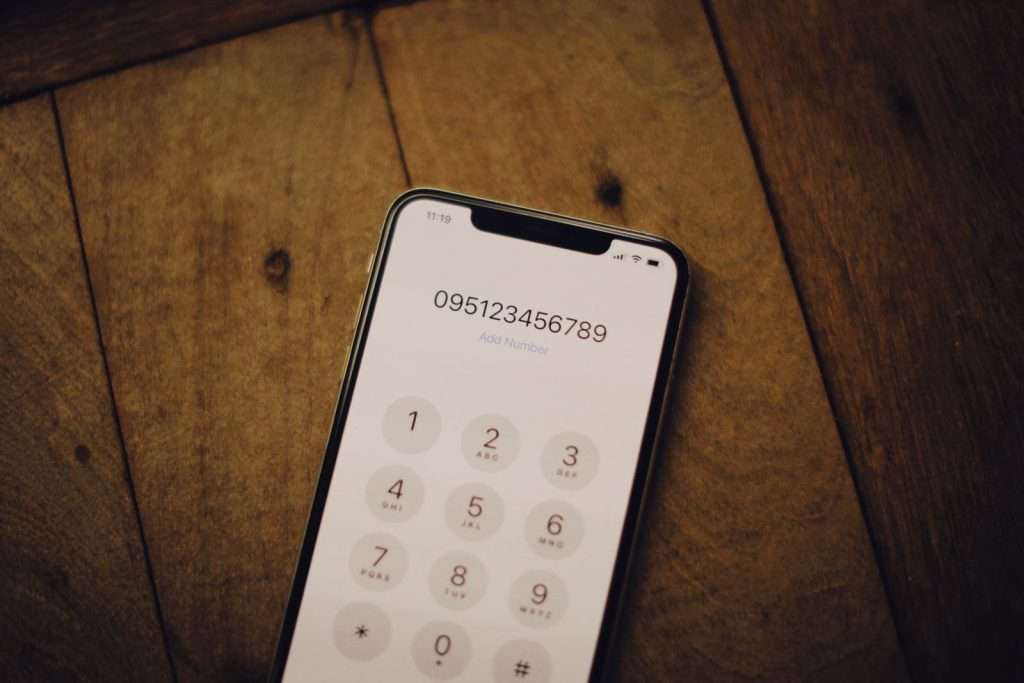
Customers rarely remember a string of ten random digits. They do remember a word. That simple fact is why vanity phone numbers have remained one of the most durable tools in business marketing for decades, long after the arrival of websites, apps, and social media. A number that spells out what you do, or follows a pattern that sticks in the mind, gives prospects an easy path to your team at the exact moment they are ready to call.
A memorable number is only half of the story, however. What happens after the phone rings matters just as much. When a vanity number is connected to a modern cloud phone system, that call can be routed to the right person, answered on any device, tracked back to the campaign that produced it, and handled gracefully after hours. In this guide, the Cytranet team walks through how vanity numbers work, how they fit alongside local and toll-free numbers, how to choose and secure the right one, and how to launch it on a business phone platform so that every call it generates is handled well.
What Is a Vanity Phone Number?
A vanity phone number is a standard telephone number chosen because its digits spell a word or phrase, or because they form a pattern that is easy to remember. Technically it is no different from any other line; its value comes from how easily people can recall and dial it.
Vanity numbers generally fall into two categories:
- Alphanumeric numbers: The digits correspond to letters on a telephone keypad and spell a word or phrase related to the business, such as 1-888-FIX-ROOF for a roofing contractor or a local number ending in LAWN-PRO for a landscaping company.
- Pattern numbers: The digits follow a repeated or rhythmic sequence, such as 1-800-222-3333 or a local number ending in 4000, which is easy to recall even without letters.
How Keypad Letter Mapping Works
Every letter on a telephone keypad corresponds to a digit. The keys 1 and 0 carry no letters, which is worth remembering when you plan a word.
| Digit | Letters |
|---|---|
| 2 | A, B, C |
| 3 | D, E, F |
| 4 | G, H, I |
| 5 | J, K, L |
| 6 | M, N, O |
| 7 | P, Q, R, S |
| 8 | T, U, V |
| 9 | W, X, Y, Z |
Using this chart, 1-888-FIX-ROOF becomes 1-888-349-7663. A caller can dial either the letters or the digits and will reach the same destination. Because the network uses only the first ten digits, a longer phrase such as 1-800-CUT-GRASS still works; the final letter is simply ignored.
Vanity, Local, Toll-Free, and Virtual Numbers: How They Fit Together
A vanity number is not a separate category of service; it is a style of number that overlaps with the other types. A vanity number can be local or toll-free, and almost any number today can be “virtual,” meaning it is managed in software rather than tied to a single copper line.
| Number type | Primary strength | Best fit | Considerations |
|---|---|---|---|
| Local | Signals a community presence through a familiar area code | Contractors, clinics, restaurants, and professional offices serving a defined region | Memorable words in popular area codes can be scarce |
| Toll-free | Free to call and recognized nationwide | National sales, customer support, and high inbound volume | Usage-based charges apply to the business receiving the calls |
| Vanity | Maximum memorability and brand recall | Advertising on radio, television, billboards, vehicles, and print | Desirable words may be unavailable or carry premium pricing |
| Virtual | Flexible routing to any device or location | Remote teams, multi-location companies, and mobile workforces | Depends on a reliable internet connection and a capable provider |
If you are still deciding between a local presence and nationwide reach, our guide to choosing between toll-free and local numbers covers the trade-offs in more depth.
Why Vanity Numbers Still Work
They Are Far Easier to Remember
Research published by the organization that administers the U.S. toll-free number registry found that roughly three out of four consumers could recall a vanity number after seeing a short advertisement, compared with only a small fraction who could recall a purely numeric number. Results will vary by audience and campaign, but the principle is consistent: words stick, and digits fade.
They Communicate What You Do
A well-chosen word is both a phone number and a short description of your service. A caller who sees FIX-ROOF on a truck or a yard sign knows immediately what the business offers and how to reach it, without needing to search online.
They Perform Where Attention Is Brief
Radio spots, billboards, vehicle wraps, and television ads give viewers only a few seconds to absorb your contact information. A memorable number can be the difference between a call today and a forgotten impression, although results always depend on your offer, creative, and audience.
They Travel With You
A number you control can generally be ported between providers, so your investment in signage and advertising survives a future phone system upgrade. For a step-by-step look at changing providers safely, see our article on switching business phone providers without losing a call.
How a Vanity Number Works With a Cloud Phone System
The telephone network treats a vanity number exactly like any other number, a point covered in our guide to how business phone systems actually work. When a customer dials the letters, the phone converts them to digits, the carrier routes the call to your provider, and your phone system decides what happens next. That last step is where the real customer experience is created.
With a cloud-hosted system such as Cytranet Business VoIP, the routing options behind your vanity number can include:
- Auto-attendants that greet callers and direct them to sales, service, or billing
- Ring groups that alert several team members at once so calls are answered quickly
- Call queues with on-hold messaging for busy periods
- Time-of-day and holiday schedules that change routing automatically
- Forwarding to mobile apps and softphones for remote and field staff
- Voicemail-to-email delivery and custom greetings for after-hours callers
- Overflow and failover rules that send calls to another location or to mobile devices if a site is unavailable
- Call logs, missed-call tracking, and queue reporting
Texting availability depends on the number type, carrier registration, and intended use, so confirm it before printing a number in a text promotion. Our guide to business text messaging explains how to do it correctly.
How to Choose and Secure the Right Vanity Number
1. Brainstorm Words Your Customers Already Use
Start with the words a customer would naturally associate with your service, your location, or the action you want them to take. A landscaping company might consider LAWN, YARD, GRASS, MOW, or GREEN. A dental office might consider SMILE, TEETH, or DENTIST. Favor words that are short, common, and spelled only one way.
2. Choose Between Local and Toll-Free
A local area code signals that you are part of the community, which is valuable for service businesses. A toll-free number signals national reach and removes any cost barrier for callers. Common toll-free prefixes include 800, 888, 877, 866, 855, 844, and 833. The 800 prefix is the most recognized, while newer prefixes typically have more available inventory. A strong word on a newer prefix often outperforms a weak word on 800.
3. Check Availability and Variations
If your first choice is taken, try variations: add a short word such as GO, GET, or CALL; switch to a different prefix; or use a local area code. For example, if 1-800-GO-TIRES is unavailable, a tire shop might consider a local number ending in FIX-TIRE. Keep in mind that federal rules prohibit hoarding or brokering toll-free numbers, so a legitimate toll-free number should be reserved for your actual use through an authorized provider rather than purchased from a reseller.
4. Test the Number With Real People
Read the number aloud to several colleagues and ask them to write it down a few minutes later. If homophones, silent letters, or unusual spellings cause hesitation, keep looking.
5. Confirm Features Before You Commit
Make sure the number supports everything you plan to do with it, using our guide to business phone system features as a reference: inbound and outbound calling, caller ID, text messaging, call recording, forwarding, and porting into your phone system.
6. Port or Provision the Number Carefully
If you already control a vanity number, it can usually be moved to a new provider through a port request. Your provider will typically ask for a recent bill, your account number and PIN, the service address, and a signed letter of authorization. Do not cancel your existing service until the port completes and inbound calls are reaching the new system; canceling early can cause the number to be released.
7. Configure and Test Every Path
Once the number is live, test it thoroughly before it appears in any advertising:
- Call from mobile phones on more than one carrier.
- Listen to the main greeting and every auto-attendant option.
- Confirm transfers, ring groups, and queue behavior.
- Test after-hours and holiday routing.
- Leave a voicemail and confirm notifications arrive.
- Send and receive a text message if texting is enabled.
- Verify outbound caller ID displays correctly and is not flagged as spam likely.
Our business phone system installation checklist is a helpful companion for this step.
8. Connect the Number to Your Campaigns
Document which campaign each number supports. If you need to compare the performance of a billboard against a radio spot, give each channel its own number. If brand consistency matters more than attribution, keep one primary vanity number everywhere and use separate tracking numbers behind the scenes. Our inbound calling guide explains which metrics to watch once calls start arriving.
Common Vanity Number Mistakes to Avoid
- Choosing a word that is hard to spell. Clever phrases lose their value if callers cannot dial them correctly.
- Ignoring the digit sequence. Always print the numeric version alongside the letters, such as 1-888-FIX-ROOF (1-888-349-7663), for callers who prefer digits.
- Skipping routing tests. A memorable number that leads to an endless ring or a confusing menu hurts your brand.
- Neglecting account security. Limit administrative access, set a strong port-out PIN, and keep ownership records current so the number cannot be hijacked or lost.
- Overlooking network readiness. Cloud calling depends on a stable connection, as our VoIP internet requirements guide explains. Quality-of-service settings, a business-class firewall (see VoIP security in 2026), and a backup internet path keep calls clear and reachable.
Protect the Investment Behind Your Number
A vanity number often becomes one of a company’s most visible assets, printed on vehicles and advertising for years. If your office loses internet service or power, calls to your number should automatically fail over to another location, to mobile devices, or to voicemail with alerts, rather than ringing into silence. Cytranet’s internet failover and backup connectivity options, combined with business-grade fiber and fixed wireless service, help keep that number reachable. For a broader view, read our business continuity playbook for cloud phone systems.
After hours, an AI receptionist can answer routine questions, capture caller details, and route urgent calls to an on-call team member, so leads generated at 9 p.m. are not lost until morning.
Frequently Asked Questions
Can I keep my current number and still use a vanity number?
Yes. Many businesses keep their main local number for existing customers and add a vanity number for advertising. Both can ring into the same phone system and follow the same routing rules.
Do vanity numbers cost more than standard numbers?
Sometimes. Pricing depends on number type and availability, and toll-free numbers carry usage charges for inbound minutes.
Make Your Number Work as Hard as Your Marketing With Cytranet
Cytranet is a Las Vegas-based, business-only telecommunications carrier serving businesses, nonprofits, and government organizations across Nevada, Arizona, California, and beyond. We deliver cloud-hosted business VoIP with auto-attendants, ring groups, call queues, time-of-day routing, voicemail-to-email, and mobile and desktop apps, along with local and toll-free numbers, number porting, business texting, SIP trunking, unified communications, and dedicated fiber and fixed wireless internet. Our team can help you plan a memorable number, port the numbers you already own, design call flows that turn every ring into a conversation, and build in the redundancy that keeps your business reachable.
Call 702-846-5000 or email info@cytranet.com to schedule a consultation, or request a free technology evaluation.
Talk to Cytranet
A business-only carrier for fiber internet, cloud voice, managed Wi-Fi, and managed IT. Start with a free technology evaluation.