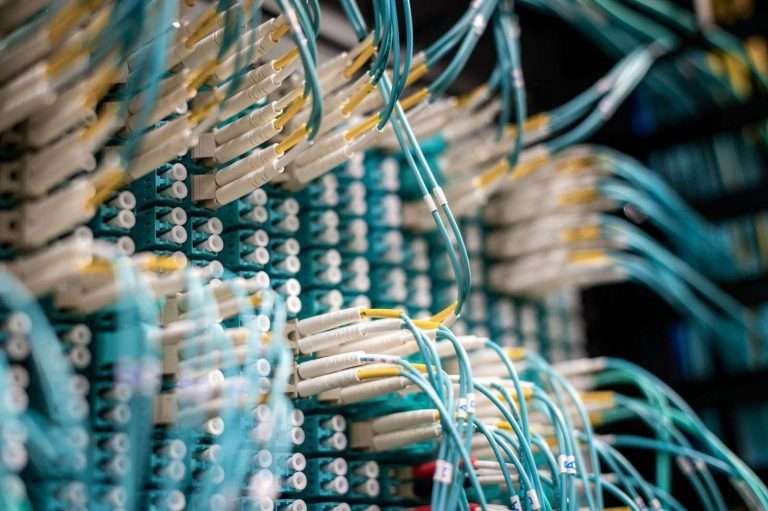
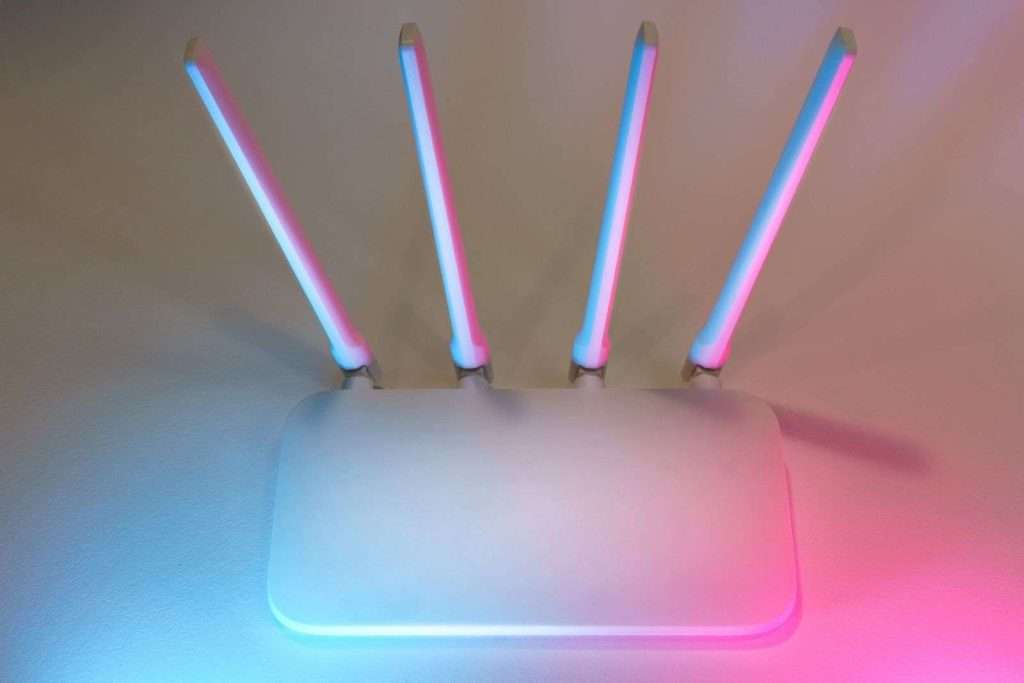
Every few years, a piece of networking hardware arrives that hints at where the whole industry is heading. This week brought one of those moments. At a major European broadband trade show in Vienna, a U.S. fiber provider, a leading wireless chipmaker, and a networking equipment manufacturer unveiled a Wi-Fi 8 gateway that runs artificial intelligence directly on the device. It is designed to serve as the main home router for a symmetrical 20 gigabit-per-second fiber service, and it is built with future 50-gigabit speeds in mind.
I am Doug Roberts, chief technology officer at Cytranet. I have spent a long career watching wireless standards evolve, and I want to share what was announced, why it matters, and how businesses, property owners, and public agencies should think about Wi-Fi 8 and AI-capable networking equipment as they plan the next few years.
What was announced
The new gateway pairs Wi-Fi 8 connectivity with a dedicated neural processing unit, a specialized chip designed to run AI workloads efficiently. According to the provider’s published materials, that processor can run compact large language models locally, which allows the gateway to understand and act on voice commands without sending household network data to the cloud. The chipmaker supplied the silicon platform, and the equipment manufacturer designed and engineered the gateway and its software.
The provider’s chief technology and product officer described the collaboration as transforming the router into an intelligent service platform and said the company is rethinking how customers interact with their home networks and with their internet provider.
At the show, the partners demonstrated several voice-driven features, including parental controls that can limit social media access on a child’s devices on request, and guest Wi-Fi access shared through a QR code displayed on the gateway’s built-in touchscreen. The device was also designed to sit out in the open, such as on a living room shelf, rather than hidden in a closet where walls and clutter weaken the wireless signal.
Existing customers on the provider’s 20-gigabit tier will receive the gateway first, and the company plans to upgrade all of them once the device is fully certified, at no additional cost according to its fact sheet. The provider also said it has completed a live-network trial of 50-gigabit passive optical network technology and plans a residential 50-gigabit trial using the new gateway by spring 2027.
A quick primer on Wi-Fi 8
Wi-Fi 8 is the industry name for the IEEE 802.11bn standard, the successor to Wi-Fi 7. The standard is still being developed, with final ratification expected later in the decade, so early equipment like this gateway is arriving ahead of the finished specification, as often happens with new generations.
Each previous generation focused heavily on raw speed. Wi-Fi 8 shifts the emphasis toward reliability. The working goal is often described as “ultra high reliability”: more consistent throughput, lower and more predictable latency, fewer dropped connections as devices move between access points, and better coordination among neighboring access points so they interfere with one another less. For anyone who has managed Wi-Fi in a busy hotel, a hospital, a school, or an apartment building, that focus is very welcome. Peak speed has rarely been the real problem in those environments. Consistency has.
Why the AI part matters
The more interesting story, in my view, is the decision to put meaningful AI processing inside the gateway itself. This is a clear example of edge AI, where intelligence runs close to the user rather than in a distant data center. There are three practical benefits.
Privacy
When a gateway can interpret a command locally, the details of a household’s or business’s network activity do not have to leave the building to be processed. That is a meaningful privacy improvement, and it will matter to organizations with sensitive data, such as clinics, law offices, and financial firms.
Responsiveness
Local processing means faster responses and continued operation even if a cloud service is slow or unavailable. A network that can diagnose itself and adjust settings on its own, without waiting for a remote server, is a more resilient network.
Simplicity
Most people do not want to learn a networking dashboard. Being able to say “give my guests Wi-Fi for the evening” or “pause the kids’ social media until homework is done” lowers the barrier to using features that already exist but go unused because they are buried in menus.
What this means for businesses
Consumer equipment usually leads the headlines, but business networks follow close behind. Here is how I would advise organizations to plan.
Do not rip and replace yet
If your organization recently invested in Wi-Fi 6, 6E, or 7, that equipment has years of useful life ahead of it. Wi-Fi 8 business equipment will mature over the next several years, and the smartest approach is to plan for it during your normal refresh cycle rather than chasing the first products to market.
Invest in the parts that last
The access points will change several times over the life of a building. The cabling, the fiber connection, and the network design will not. Every new wireless generation pushes more traffic back through the wired network, so modern structured cabling capable of multi-gigabit speeds and properly planned power over Ethernet will pay off with Wi-Fi 7 today and Wi-Fi 8 tomorrow. I have said it before in a piece on why cabling comes first, and it remains true.
Make sure the pipe can keep up
A 20-gigabit gateway is a striking reminder of how quickly bandwidth expectations are rising. Businesses do not all need that much capacity today, but they do need connections that can grow without a complete rebuild. Dedicated fiber offers symmetrical speeds and a clear upgrade path, and pairing it with fixed wireless and automatic failover keeps your organization online if one path is interrupted.
Expect AI in your network management
The same edge AI concepts appearing in consumer gateways are arriving in business network management. Expect tools that predict congestion, detect unusual device behavior, and recommend or apply fixes automatically. These capabilities will make managed Wi-Fi more proactive, but they work best when paired with experienced engineers who understand your environment and can validate what the automation suggests.
Treat smart gateways as security endpoints
Any device that listens for voice commands, runs software models, and controls network settings deserves the same security attention as a server. Before deploying AI-capable networking equipment in a business setting, confirm how firmware updates are delivered, who can issue commands, how administrative access is protected, and what data, if any, leaves the device. Segmenting guest, employee, and building-system traffic remains essential no matter how intelligent the hardware becomes. Cytranet’s network security team helps clients apply those principles as new equipment arrives.
What this means for properties
Hotels, apartment communities, senior living facilities, student housing, and event venues stand to benefit the most from Wi-Fi 8’s reliability focus. These environments pack many devices into tight spaces and see heavy evening demand, and their residents and guests judge the whole property by whether the Wi-Fi works.
Two details from this week’s announcement are especially relevant. First, placement matters. The decision to design a gateway that lives in the open reflects a truth every wireless engineer knows: walls, closets, and metal cabinets are the enemy of good coverage. In properties, that means professional placement of access points throughout units and common areas, not a single router in a utility room. Second, guest access matters. Easy, secure guest onboarding through a QR code is a convenience that hospitality properties and offices can deliver today with the right managed network.
If you operate a property, our articles on managed Wi-Fi for venues, hospitals, hotels, and multi-dwelling properties and rising guest Wi-Fi expectations offer more detail.
My takeaway
This announcement is a glimpse of the near future: faster fiber to the premises, more reliable wireless inside, and equipment smart enough to manage itself and protect privacy at the same time. None of that requires anyone to panic or rush. It does reward organizations that build a strong foundation now, with quality cabling, scalable fiber, sensible redundancy, and a partner who will guide them through each upgrade at the right time.
Frequently asked questions
When will Wi-Fi 8 business equipment be widely available?
Early devices are appearing now, ahead of the finished standard. Broad availability of enterprise-grade equipment is expected to follow over the next several years, so most organizations should plan for it in a future refresh cycle.
Should we wait for Wi-Fi 8 instead of upgrading now?
If your current Wi-Fi is struggling, waiting rarely makes sense. Wi-Fi 6E and Wi-Fi 7 equipment deliver substantial improvements today, and investments in cabling and fiber carry forward to Wi-Fi 8.
Does Cytranet design and manage Wi-Fi networks?
Yes. We design, install, monitor, and support managed Wi-Fi for businesses, hotels, multi-dwelling communities, healthcare facilities, schools, and event venues, along with the structured cabling and fiber connectivity behind them.
Plan your next network with Cytranet
Cytranet is a Las Vegas-based, licensed telecommunications carrier serving businesses, enterprises, property owners, nonprofits, and government agencies across Nevada, Arizona, California, and beyond. Our services include dedicated fiber and fixed wireless internet, managed Wi-Fi, structured cabling, internet failover, hosted business VoIP, SIP trunking, private data transport, colocation, and managed IT services. Whether you are planning a refresh this year or mapping out the next five, our team would be glad to help.
Call 702-846-5000, email info@cytranet.com, or request a free technology evaluation.
Talk to Cytranet
A business-only carrier for fiber internet, cloud voice, managed Wi-Fi, and managed IT. Start with a free technology evaluation.